
Marne Ke Baad Body Mein Kya Hota Hai? Pehle 1 Minute Se 1 Saal Tak | 3D Animation
Aakhri Saans Ke Baad Shareer Ke Andar Kya Hota Hai? | Maut Ka Science 3D | Hindi
Medically Reviewed By
Medscope Editorial Team Verified
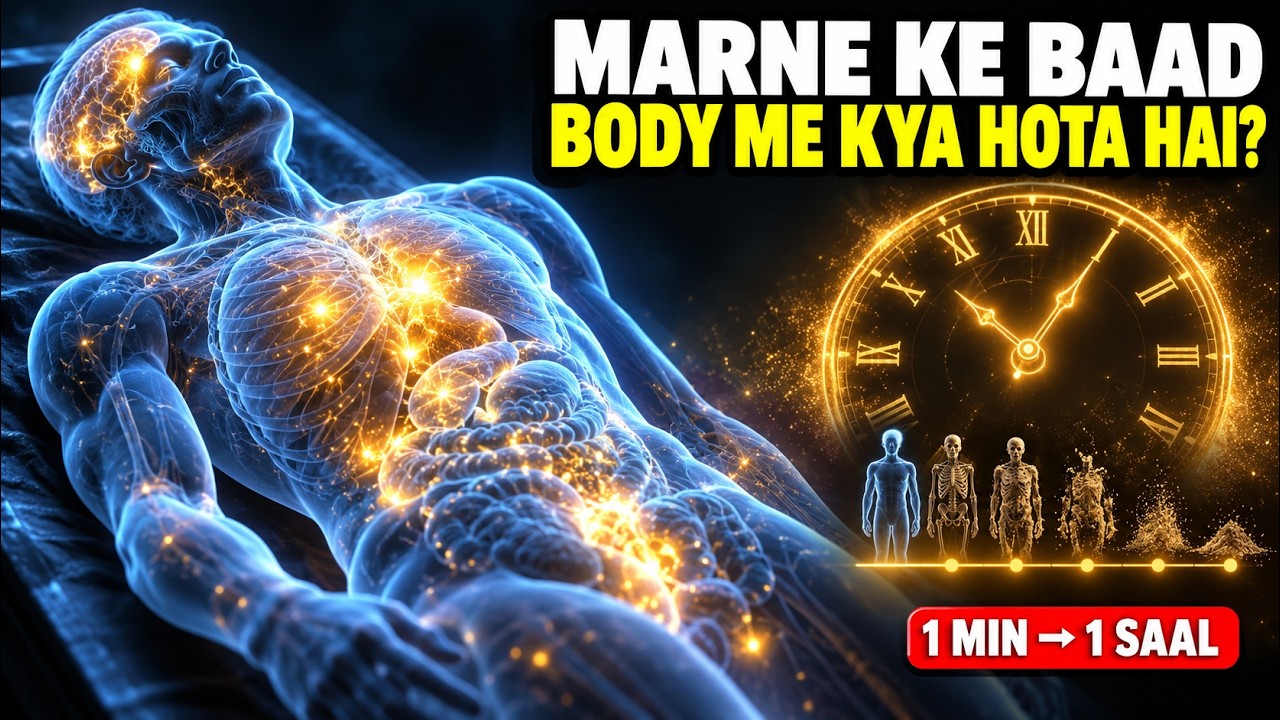
Quick Answer: Marne Ke Baad Body Mein Kya Hota Hai? Pehle 1 Minute Se 1 Saal Tak | 3D Animation
Aakhri Saans Ke Baad Shareer Ke Andar Kya Hota Hai? | Maut Ka Science 3D | Hindi
Lesson Overview
Maut Ke Baad Bhi Zinda Rehte Hain Yeh Cells! | What Happens After Death in Hindi (3D)
Marne ke baad shareer ke andar kya hota hai? Is 3D medical animation mein dekhiye aakhri saans ke pehle minute se ek saal tak ka poora safar — dimaag, cells, Rigor Mortis, forensic science, myths ka sach, aur woh ek faisla jo 8 zindagiyan bacha sakta hai.
Is video mein aapko in sawaalon ke jawab milenge: • Doctor kis cheez ko maut kehte hain? Clinical Death aur Brain Death mein kya fark hai? • Oxygen rukne ke kitni der baad dimaag ko nuksan hona shuru hota hai? • Kya marte waqt "poori zindagi aankhon ke saamne" dikhti hai? Research kya kehti hai? • Shareer thanda kyun hota hai (Algor Mortis) aur kitni tezi se? • Neele-bangni dhabbe kyun bante hain (Livor Mortis)? • Shareer akad kyun jaata hai (Rigor Mortis) aur phir dheela kyun padta hai? • Forensic doctor maut ka samay kaise batate hain? • Kya marne ke baad bhi kuch cells aur genes kaam karte rehte hain? • Kya marne ke baad baal aur nakhun badhte hain? Kya aatma ka wazan 21 gram hai? • Netradaan aur angdaan kaise hota hai, aur ek donor kitne logon ki jaan bacha sakta hai?
Netradaan / Angdaan: • Eye Bank helpline (netradaan): 1919 • NOTTO toll-free (angdaan ki jaankari): 1800-11-4770 • Sabse zaroori: apni ichchha apne parivaar ko aaj hi bataiye — aakhri faisla unhi ke haath mein hota hai.
This article turns the visual animation into readable study notes. Use it before the video to understand the structure of the topic, then watch the animation to connect the text with movement, anatomy, timing, and clinical sequence.
Why This Concept Matters
For nursing and medical students, Marne Ke Baad Body Mein Kya Hota Hai? Pehle 1 Minute Se 1 Saal Tak | 3D Animation is more than a definition to memorize. The important skill is to follow the chain of events: what starts the process, what changes inside the body, what signs or risks appear, and what a healthcare learner should notice first.
When you study this topic, separate normal function from the abnormal change. In anatomy and physiology, this means tracking structure, flow, pressure, electrical activity, or feedback control. In clinical skills, it means tracking indication, preparation, correct technique, safety checks, and common mistakes.
How To Revise This Lesson
Start with the title and write down what you already know in one minute. Next, read the overview slowly and underline the trigger, the mechanism, and the final clinical effect. After that, watch the animation once without pausing so you can see the full sequence.
On the second viewing, pause at each step and explain it aloud in your own words. If the article includes a procedure, convert each step into a checklist. If it includes pathophysiology, draw a simple arrow diagram showing cause to effect. This active recall method is usually stronger than rereading alone.
Before exams, return to the key learning questions above. If you can answer them without looking, you have understood the concept at a functional level. If an answer feels weak, replay the matching part of the animation and compare it with your textbook or class notes.
External Citations & Further Reading
To deepen your understanding of this topic, we recommend consulting the following authoritative medical resources:
- PubMed Central (PMC) — National Institutes of Health
- World Health Organization (WHO) Guidelines
- Standard medical textbooks: Gray's Anatomy, Guyton & Hall Physiology, Robbins Pathology.
Educational Note
This article is for learning and revision only. It is not a substitute for professional medical advice, diagnosis, treatment, institutional protocol, or supervised clinical training. Always follow your teacher, textbook, local policy, and qualified clinical supervisor when applying healthcare knowledge.