
40 Crore Logon Ki Bimaari! | The G6PD Mystery Explained in 3D
What is G6PD Deficiency? The Global Mystery Glucose-6-Phosphate Dehydrogenase (G6PD) deficiency is the single most common human enzyme defect in the world, curren...
Medically Reviewed By
Medscope Editorial Team Verified
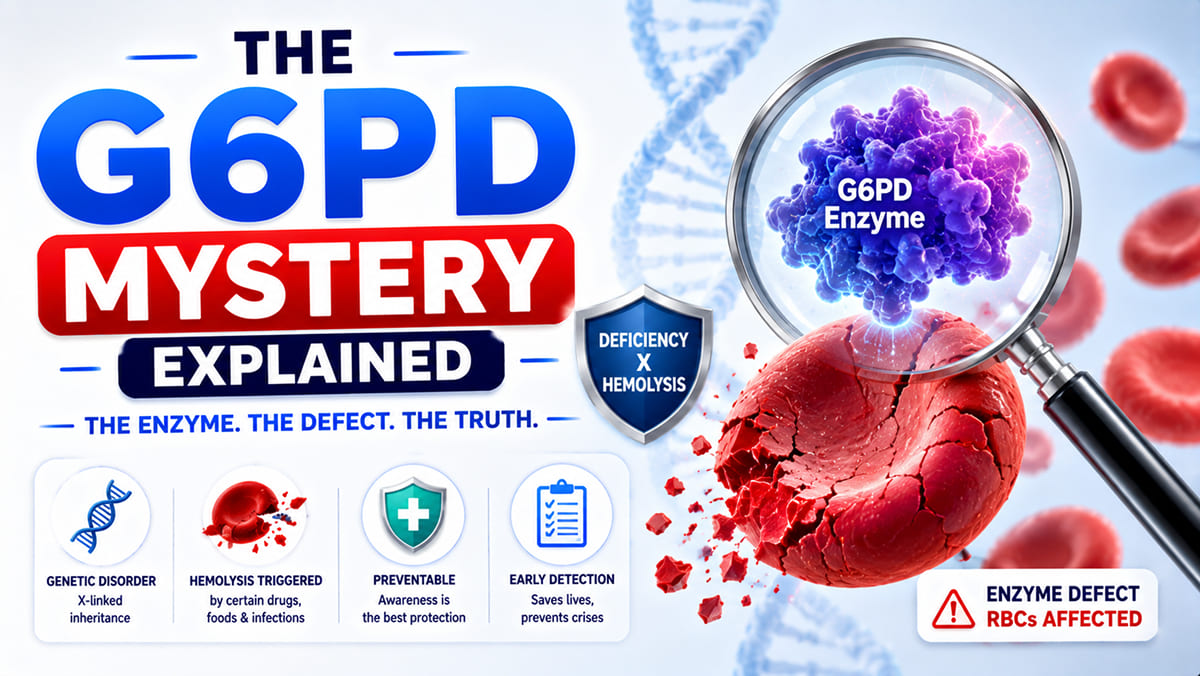
What is G6PD Deficiency? The Global Mystery
Glucose-6-Phosphate Dehydrogenase (G6PD) deficiency is the single most common human enzyme defect in the world, currently affecting an estimated 400 million people globally. Despite its massive prevalence, especially in regions like Africa, the Middle East, and South Asia, it remains a "silent" mystery to most people who have it. It is an inherited, X-linked recessive genetic disorder. Because the defective gene is located on the X chromosome, the disease predominantly affects males, while females usually act as asymptomatic genetic carriers.
The Role of the G6PD Enzyme: The Cell's Protector
To understand why this disease can be so dangerous, we must first understand the critical function of the enzyme. Red Blood Cells (RBCs) have a very tough and hazardous job; their sole purpose is to transport oxygen throughout the body. Handling oxygen constantly creates dangerous, highly reactive toxic byproducts known as Free Radicals (or oxidative stress).
The G6PD enzyme is the ultimate biochemical protector of the red blood cell. It is responsible for producing a vital substance called NADPH. NADPH acts as the fuel for the cell's internal antioxidant defense system (specifically a molecule called Glutathione). This glutathione defense system actively hunts down and neutralizes the dangerous free radicals, keeping the red blood cell's membrane strong, healthy, and intact.
The Pathophysiology of the Deficiency (Hemolysis)
In patients with G6PD deficiency, their red blood cells do not produce enough of this protective enzyme. Interestingly, under normal, day-to-day conditions, the patient feels perfectly fine and shows absolutely zero symptoms. They might go years without knowing they have the condition.
However, the medical crisis happens when the patient's body is exposed to a sudden, massive wave of Oxidative Stress. Because the red blood cells lack their chemical antioxidant shield, the oxidative stress literally shreds the fragile cell membranes apart. The red blood cells burst and die prematurely in a rapid, violent process called Hemolysis.
The Hemolytic Crisis: Symptoms and Dangers
When millions of red blood cells burst all at once, the patient suffers from an acute episode of Hemolytic Anemia. Because there are not enough red blood cells left to carry oxygen, the patient experiences severe symptoms rapidly:
- Sudden, extreme fatigue and weakness.
- A rapid heart rate (tachycardia) and shortness of breath.
- Jaundice: Yellowing of the skin and the whites of the eyes, caused by the massive release of bilirubin from the broken cells.
- Dark Urine: The urine turns dark orange, brown, or even "Coca-Cola" colored because the broken hemoglobin is being aggressively filtered and excreted by the kidneys.
The Triggers: What Causes a G6PD Crisis?
Patients with G6PD deficiency must be highly educated on the specific triggers that cause this oxidative wave, as the only real treatment is lifelong avoidance. The most notorious triggers include:
- Fava Beans: Eating fava beans (or even inhaling the pollen) can trigger a severe hemolytic crisis. This specific reaction is historically known as Favism.
- Specific Medications: Certain drugs generate high oxidative stress. These include Antimalarial drugs (like Primaquine), specific antibiotics (like Sulfa drugs and Nitrofurantoin), and high doses of Aspirin.
- Infections: Severe viral or bacterial infections are actually the most common trigger for a crisis, as the immune system's white blood cells release oxidative chemicals to fight the infection, which accidentally damages the defenseless red blood cells.
- Chemicals: Exposure to certain chemicals, particularly Naphthalene (found in mothballs).
Once diagnosed via a simple blood test, managing G6PD deficiency is entirely about prevention. By avoiding these oxidative triggers, a patient can live a completely normal, healthy, and full life.