
Cigarette Ka Ek Kash Body Mein Kya Karta Hai? | How Smoking Affects Your Body
Inside a Smoker's Lungs | The Science of Cigarette Smoke 3D
Medically Reviewed By
Medscope Editorial Team Verified
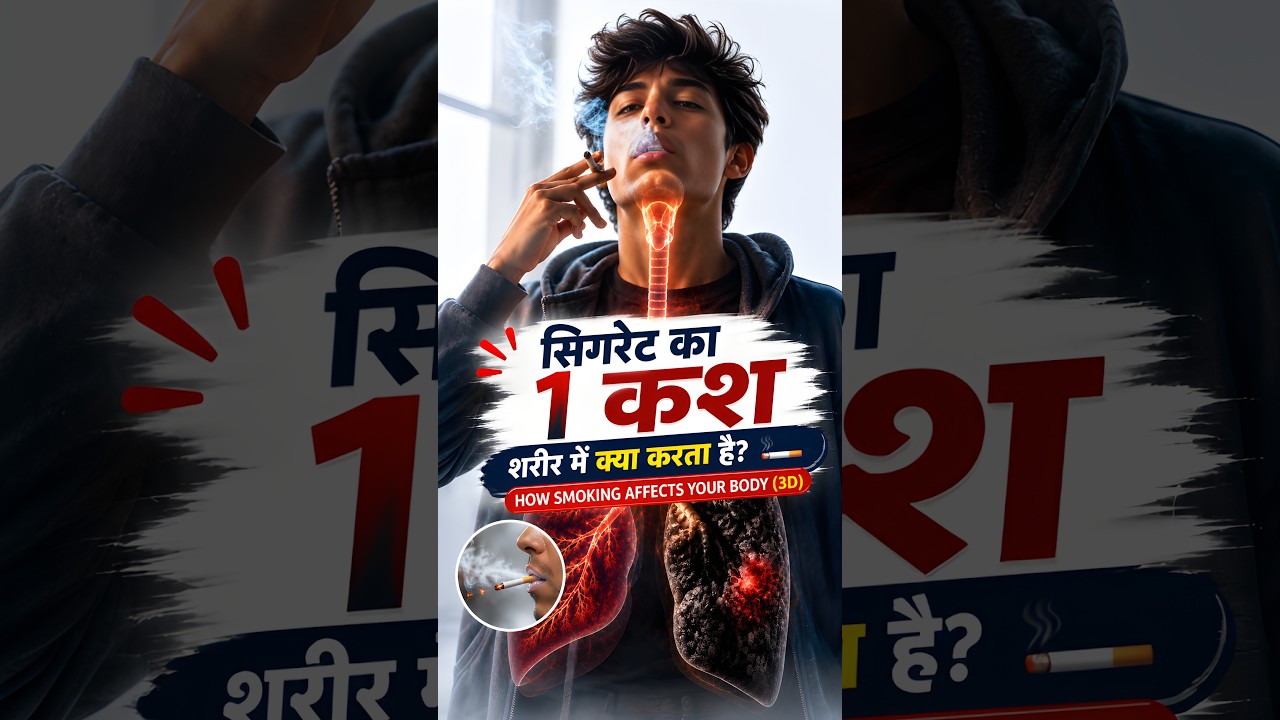
Quick Answer: Cigarette Ka Ek Kash Body Mein Kya Karta Hai? | How Smoking Affects Your Body
Inside a Smoker's Lungs | The Science of Cigarette Smoke 3D
Lesson Overview
Nicotine Dimag Ko Kaise Hack Karta Hai? | Smoking Side Effects 3D
How Smoking Ruins Your Lungs | The Science of Nicotine & Tar in 3D
Kya aapko pata hai ki cigarette ka sirf ek kash (puff) aapke sharir ke andar kya tabahi machata hai? Janiye iska asli scientific sach is premium 3D medical animation mein, aur dekhiye is zehreele dhuyein ka poora safar!
Is 3D Animation mein hum kya seekhenge? ️ Cilia Paralysis: Dhuaan sabse pehle saans ki nali mein maujood chhote baalon (Cilia) ko sunn (paralyze) kar deta hai, jo lungs ko saaf rakhte hain. ️ Tar in Lungs: Fefadon ki chhoti thailiyon (Alveoli) mein gaadha kala 'Tar' jamne lagta hai. Oxygen Block: Tar ki wajah se oxygen block ho jati hai aur khoon mein zehreeli Carbon Monoxide milne lagti hai. ️ Heart Pressure: Nicotine blood vessels ko sikod deta hai, jisse heart ko khoon pump karne mein bohot zyada mehnat karni padti hai. Nicotine Addiction: Dhuaan sirf 10 second mein dimag tak pahunch kar Dopamine release karta hai, jisse iski bhayankar lat (addiction) lag jati hai. Healing: Achhi khabar yeh hai ki smoking chhodne ke kuch hi hafton baad lungs khud ko repair karna shuru kar dete hain!
This article turns the visual animation into readable study notes. Use it before the video to understand the structure of the topic, then watch the animation to connect the text with movement, anatomy, timing, and clinical sequence.
Key Learning Questions
These are the main questions this lesson helps answer. They are useful for quick revision, viva preparation, and building a focused self-test after watching the animation.
- Cigarette peene se sharir mein kya hota hai?
- How smoking affects the lungs 3D animation.?
- What happens when you smoke a cigarette?
- Nicotine addiction and dopamine release explained.
- Smoker lungs vs Healthy lungs in Hindi.
- Tar and Carbon monoxide effects on the body.
- Science and human body facts in Hindi.
- Explore more at: www.medscopevisuals.com
Why This Concept Matters
For nursing and medical students, Cigarette Ka Ek Kash Body Mein Kya Karta Hai? | How Smoking Affects Your Body is more than a definition to memorize. The important skill is to follow the chain of events: what starts the process, what changes inside the body, what signs or risks appear, and what a healthcare learner should notice first.
When you study this topic, separate normal function from the abnormal change. In anatomy and physiology, this means tracking structure, flow, pressure, electrical activity, or feedback control. In clinical skills, it means tracking indication, preparation, correct technique, safety checks, and common mistakes.
How To Revise This Lesson
Start with the title and write down what you already know in one minute. Next, read the overview slowly and underline the trigger, the mechanism, and the final clinical effect. After that, watch the animation once without pausing so you can see the full sequence.
On the second viewing, pause at each step and explain it aloud in your own words. If the article includes a procedure, convert each step into a checklist. If it includes pathophysiology, draw a simple arrow diagram showing cause to effect. This active recall method is usually stronger than rereading alone.
Before exams, return to the key learning questions above. If you can answer them without looking, you have understood the concept at a functional level. If an answer feels weak, replay the matching part of the animation and compare it with your textbook or class notes.
External Citations & Further Reading
To deepen your understanding of this topic, we recommend consulting the following authoritative medical resources:
- PubMed Central (PMC) — National Institutes of Health
- World Health Organization (WHO) Guidelines
- Standard medical textbooks: Gray's Anatomy, Guyton & Hall Physiology, Robbins Pathology.
Educational Note
This article is for learning and revision only. It is not a substitute for professional medical advice, diagnosis, treatment, institutional protocol, or supervised clinical training. Always follow your teacher, textbook, local policy, and qualified clinical supervisor when applying healthcare knowledge.