
IV Cannula Insertion Mistake! | Correct Angle
Mastering IV Cannula Insertion: The Angle Matters Intravenous (IV) cannulation is one of the most fundamental clinical skills for nurses, paramedics, and doctors...
Medically Reviewed By
Medscope Editorial Team Verified
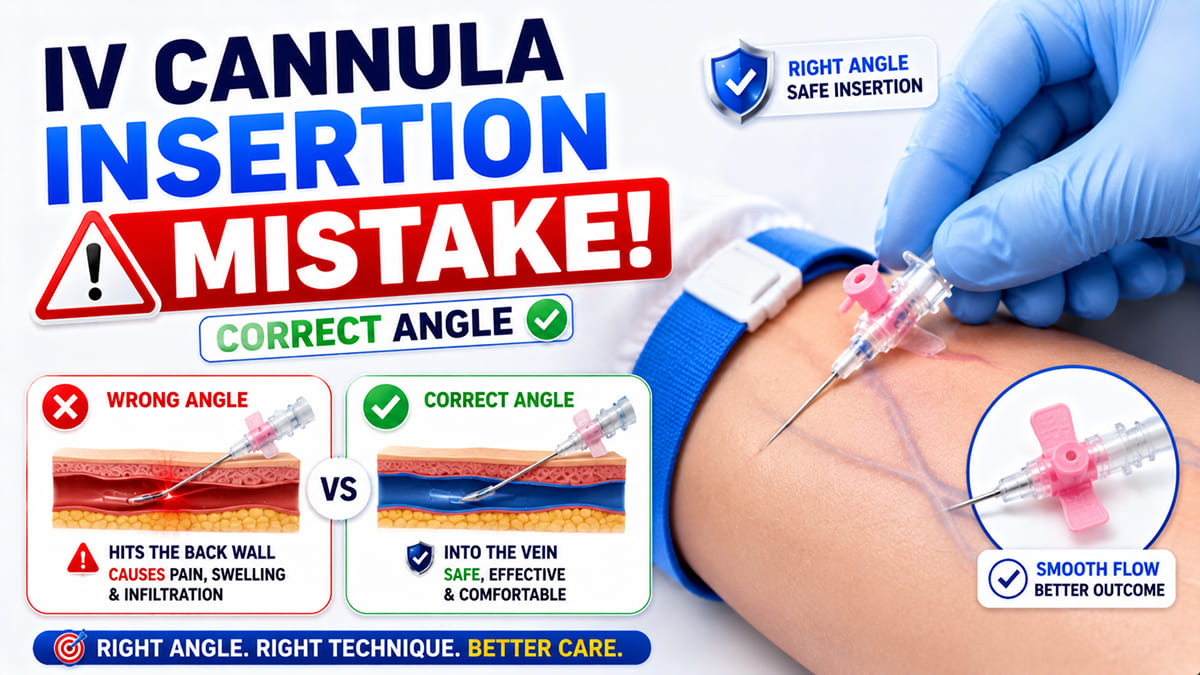
Mastering IV Cannula Insertion: The Angle Matters
Intravenous (IV) cannulation is one of the most fundamental clinical skills for nurses, paramedics, and doctors. Despite being a routine procedure, many healthcare professionals struggle with "blown veins" or failed insertion attempts. One of the most common reasons for a failed IV line is using the incorrect insertion angle. Understanding the biomechanics of the needle angle is crucial for a painless and successful IV insertion.
The Most Common IV Insertion Mistake
Many beginners make the mistake of either going in too steep or too shallow.
- Angle Too Steep (Over 45 degrees): Inserting the needle at a high angle almost guarantees that you will puncture right through the vein (transfixation). This causes a hematoma, blowing the vein, and causing unnecessary pain to the patient.
- Angle Too Shallow (Under 10 degrees): Going in too flat might cause the needle to just slide over the top of the vein, scraping the tissue without actually piercing the vein wall.
What is the Correct Angle for IV Cannulation?
For most standard peripheral veins (like those on the forearm or the back of the hand), the ideal initial insertion angle is between 15 to 30 degrees. Here is how you should approach it:
- Assess the Vein: Deeper veins require a slightly steeper angle (closer to 30 degrees), while superficial, visible veins on the back of the hand require a much shallower angle (around 10 to 15 degrees).
- The Initial Puncture: Anchor the vein tightly with your non-dominant hand to prevent it from rolling. Enter the skin at a 15-30 degree angle, keeping the bevel of the needle facing up.
- Look for the Flashback: Advance the needle slowly until you see a primary "flashback" of blood in the catheter chamber. This indicates you have successfully entered the vein.
The "Drop and Advance" Technique (Crucial Step)
Seeing the blood flashback does NOT mean you should immediately push the plastic cannula in. The tip of the metal needle is in the vein, but the plastic catheter tip might still be outside. Follow this technique to avoid failure:
- Once you see the flashback, stop advancing at the current angle.
- Drop the Angle: Lower the angle of the needle so it is almost flush (parallel) with the patient's skin.
- Advance Slightly: Push the entire unit (needle and catheter together) forward by just 1 to 2 millimeters. This ensures the plastic catheter is safely inside the vein lumen.
- Slide the Catheter: Finally, hold the metal needle still and gently slide the plastic catheter off the needle and completely into the vein.
Clinical Practice Tips
Always trust your anatomy and tactile feel. By correcting your angle and mastering the "drop and advance" technique, your first-attempt IV success rate will improve significantly, ensuring better patient comfort and care.
Vein Selection and Patient Preparation
Good cannulation begins before the needle touches the skin. Choose a straight, soft, bouncy vein whenever possible. Avoid areas of infection, burns, edema, fistula arms, joints, bruised skin, or veins below a recent infiltration site. Warm compresses, lowering the limb, gentle tapping, and proper tourniquet placement can improve vein filling. Explain the procedure to the patient, support the limb, clean the site with antiseptic, and allow it to dry fully before puncture. For fragile veins, elderly patients, or pediatric patients, a smaller cannula and lower angle are often safer.
Troubleshooting Failed IV Cannulation
- No Flashback: The angle may be too shallow, the vein may have rolled, or the tip may be beside the vein.
- Swelling During Flush: Stop immediately; this suggests infiltration or vein rupture.
- Pain or Resistance: Do not force the flush. Reassess placement and patient comfort.
- Blood Flash Then Failure: The needle entered the vein but the plastic catheter was not advanced far enough before threading.
Successful IV insertion depends on vein assessment, correct angle, stable hand position, aseptic technique, and knowing when to stop and choose a new site.