
Never Make This ET Suctioning Mistake! (3D Animation) | ICU Skills
The Most Common ET Suctioning Mistake in the ICU Endotracheal (ET) suctioning is a life-saving procedure performed daily in Intensive Care Units (ICUs) to maintai...
Medically Reviewed By
Medscope Editorial Team Verified
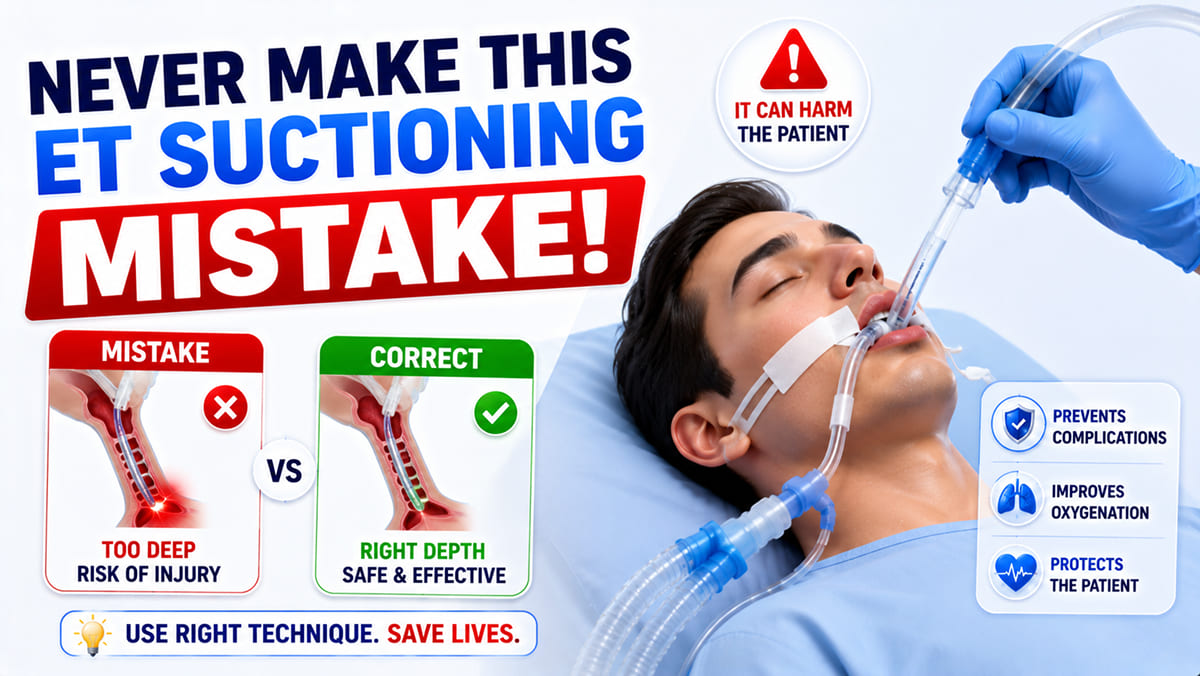
The Most Common ET Suctioning Mistake in the ICU
Endotracheal (ET) suctioning is a life-saving procedure performed daily in Intensive Care Units (ICUs) to maintain a patent airway for patients on mechanical ventilation. However, it carries significant risks if not performed correctly. The most common and dangerous mistake nursing students and respiratory therapists make is failing to withdraw the catheter after hitting the carina. Let's explore why this mistake happens and how to avoid it.
Understanding the Carina and Mucosal Damage
The carina is the anatomical point where the trachea (windpipe) bifurcates or splits into the right and left main bronchi. The mucosal tissue lining this area is highly sensitive, fragile, and vascular (rich in blood vessels).
When healthcare providers insert the suction catheter blindly down the ET tube, they rely on tactile feedback. A major clinical error occurs when a provider feels resistance (which is the catheter hitting the carina) and immediately applies strong suction without pulling back. Alternatively, repeatedly jabbing the catheter against this bifurcation causes severe physical trauma.
The Consequences of Improper Suctioning
Making this critical ET suctioning mistake can lead to severe patient complications, including:
- Tracheal Mucosal Trauma: The catheter can tear the delicate lining of the airway, leading to bleeding and ulceration.
- Vagal Stimulation: Hitting the carina aggressively can stimulate the vagus nerve, causing sudden and severe bradycardia (dangerous drop in heart rate) and hypotension.
- Hypoxia: Prolonged suctioning against the tissue blocks airflow, leading to rapid oxygen desaturation.
The Correct Technique: The 2-Centimeter Rule
To perform ET suctioning safely and protect the patient's airway, always follow the standard clinical safety protocol:
- Insert the sterile suction catheter gently without applying any suction.
- Advance the catheter slowly until you meet slight resistance (this means you have reached the carina) or until the patient coughs.
- The Critical Step: Immediately withdraw the catheter by 1 to 2 centimeters (about half an inch) before you apply any suction.
- Apply continuous or intermittent suction while withdrawing the catheter in a gentle rotating motion. Do not suction for more than 10 to 15 seconds.
Key Takeaway for Healthcare Professionals
Always remember that suctioning is for clearing secretions, not for scraping the airway. Mastering the "pull-back" technique ensures maximum airway clearance with minimal mucosal trauma, making you a safer and more competent critical care nurse.
When Should ET Suctioning Be Performed?
ET suctioning should be done based on patient need, not as a routine habit every few minutes. Clinical indications include visible secretions in the endotracheal tube, coarse crackles on auscultation, a sudden rise in peak airway pressure on the ventilator, reduced tidal volume, coughing, restlessness, or a falling SpO2 level that suggests mucus is blocking airflow. Unnecessary suctioning can irritate the airway, increase infection risk, and cause oxygen desaturation, so assessment must always come first.
Safe Suctioning Checklist for Nursing Students
- Pre-oxygenate: Give 100% oxygen before suctioning when clinically appropriate, especially in ventilated or unstable patients.
- Maintain Sterility: Use sterile gloves and a sterile catheter to reduce the risk of ventilator-associated pneumonia.
- Limit Each Pass: Keep suction time under 10 to 15 seconds and allow the patient to recover between passes.
- Monitor the Patient: Watch heart rate, rhythm, blood pressure, and SpO2 throughout the procedure. Stop immediately if severe bradycardia, hypoxia, bleeding, or distress occurs.
The safest technique combines gentle catheter insertion, the 1 to 2 cm pull-back rule, controlled suction pressure, and close monitoring. This makes ET suctioning an airway clearance procedure rather than an airway injury.