
Period Cramps Kyun Hote Hain? | Causes & Fast Relief Tips | Science of Menstruation
Period Cramps Kyun Hote Hain? Causes, Fast Relief Tips & The Science of Menstruation For millions of women around the world, "that time of the month" brings along...
Medically Reviewed By
Medscope Editorial Team Verified
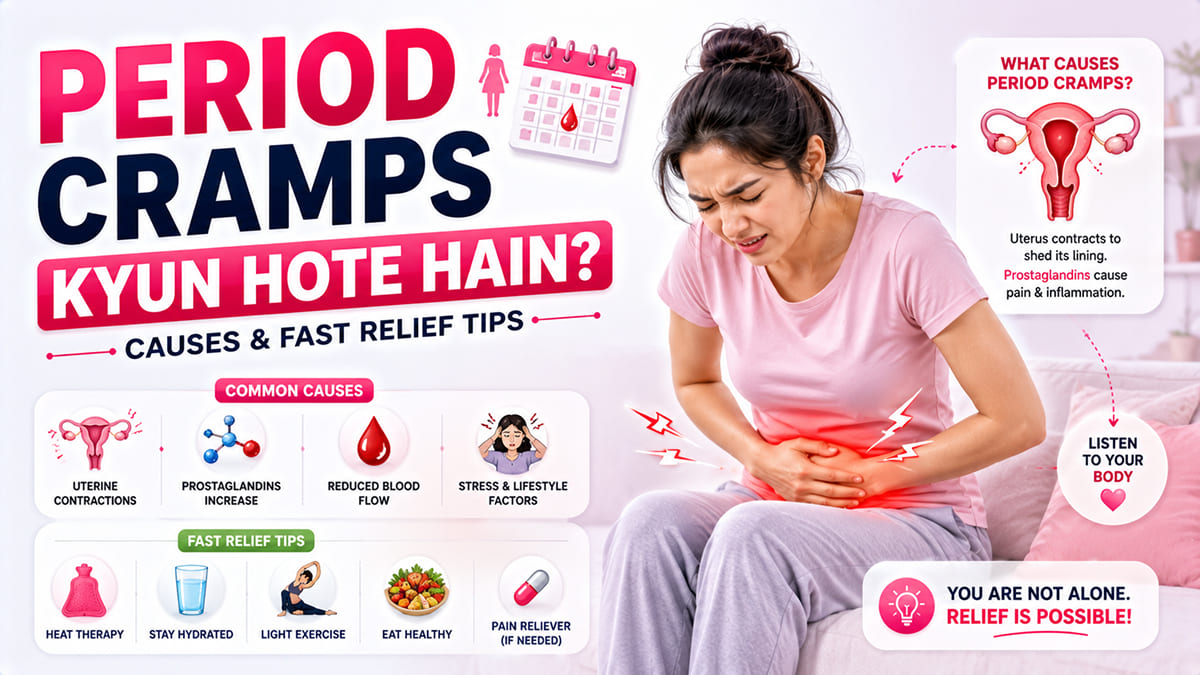
Period Cramps Kyun Hote Hain? Causes, Fast Relief Tips & The Science of Menstruation
For millions of women around the world, "that time of the month" brings along a highly uncomfortable, and sometimes debilitating, physical ordeal: Period Cramps. Medically known as Dysmenorrhea, the severe, throbbing, or cramping pain in the lower abdomen is something most women experience during their menstrual cycle. But why does the human body subject itself to such intense pain on a monthly basis?
Many people misunderstand period cramps, assuming they are just a "normal ache" or psychological stress. However, modern medical science reveals a fascinating, highly complex, and sometimes aggressive biochemical battle happening deep inside the female reproductive system. Let us take a deep, 3D anatomical journey into the uterus to understand the true science of menstruation and exactly why period cramps happen.
The Preparation: Building the Endometrium
To understand the pain, we must first understand the purpose of the menstrual cycle. The female body operates on a roughly 28-day biological clock. Every single month, the reproductive system prepares for the possibility of creating new life (pregnancy).
During the first half of the cycle, the ovaries release hormones like estrogen. This hormone acts as a biological construction signal, commanding the inner lining of the uterus (the womb) to grow and thicken. This specialized inner lining is called the Endometrium. The endometrium becomes thick, spongy, and heavily enriched with a massive network of blood vessels and nutrients. It is perfectly designed to act as a soft, nourishing bed for a fertilized egg to implant and grow into a baby.
The Trigger: When Pregnancy Does Not Occur
If a woman does not become pregnant during her cycle (meaning no fertilized egg implants into the wall), the thick, blood-rich endometrial bed is no longer needed. The body’s hormone levels—specifically progesterone—suddenly drop. This rapid drop in hormones acts as a biological trigger, signaling the uterus that it is time to demolish the temporary endometrial lining, shed it, and clean out the uterus to start fresh next month.
This physical shedding and removal of the endometrium, which exits the body through the vagina along with blood, is what we call Menstruation (a period).
The Chemical Culprit: The Power of Prostaglandins
Shedding the endometrial lining is not a passive process; the uterus has to actively push it out. To do this, the breaking-down endometrial cells release a highly potent, hormone-like chemical called Prostaglandins.
Prostaglandins are the true culprits behind your period cramps. These chemicals act directly on the Myometrium—the thick, muscular middle layer of the uterus. Prostaglandins force these smooth muscles to violently contract and squeeze, essentially wringing out the uterus like a wet towel to expel the old blood and tissue.
Medical Fact: Women who experience extremely severe, agonizing period cramps (Primary Dysmenorrhea) are scientifically proven to produce significantly higher levels of prostaglandins than women who experience mild cramps. More prostaglandins equal more aggressive, violent uterine contractions.
The Mechanism of Pain: Hypoxia and Ischemia
So, why exactly do these muscle contractions hurt so much? The pain is actually a matter of oxygen deprivation.
When the uterus contracts normally, you barely feel it. However, during a period, the high levels of prostaglandins cause the uterine muscles to squeeze too tightly and too fast. When the muscle squeezes with such intense pressure, it physically crushes and pinches the delicate blood vessels that supply oxygen-rich blood to the uterus itself.
This creates a temporary medical condition known as Ischemia (restricted blood flow). Because the blood flow is cut off, the uterine tissue experiences Hypoxia (a severe lack of oxygen). When muscle tissue is starved of oxygen, the surrounding sensory nerves instantly panic. They activate and fire massive, high-intensity pain signals directly up the spinal cord to the brain, screaming for oxygen.
This is the exact same biological mechanism that causes heart pain (angina) during a heart attack when the heart muscle is temporarily deprived of oxygen. The intense, throbbing ache of a period cramp is literally your uterine muscles suffocating for a few seconds!
Scientific Fast Relief Tips: How to Stop the Pain
Now that you know exactly why the pain happens (muscle spasms, chemical overload, and oxygen starvation), you can use science to stop it effectively. Here are the most medically proven methods for fast relief:
1. Heat Therapy (The Power of Vasodilation)
Applying a hot water bottle or an electric heating pad to your lower abdomen is not just a comforting old wives' tale; it is pure physics. When you apply heat, it penetrates the skin and reaches the uterine muscles. The heat causes Vasodilation—the physical widening and relaxing of the blood vessels.
By forcing the blood vessels to open up, blood rushes back into the starved uterine tissue, instantly restoring the oxygen supply. The moment oxygen returns, the nerves stop sending pain signals to the brain, and the intense cramping rapidly subsides.
2. Proper Hydration
Drinking plenty of water might seem unrelated, but dehydration causes your blood to become thicker and reduces overall blood volume. This makes it harder for oxygen to reach the cramping muscles. Staying highly hydrated improves systemic blood flow and helps reduce the uncomfortable bloating that often accompanies menstruation.
3. NSAIDs (Prostaglandin Blockers)
If the pain is unbearable, doctors often recommend over-the-counter pain relievers known as NSAIDs (Non-Steroidal Anti-Inflammatory Drugs), such as Ibuprofen or Mefenamic Acid.
How do they work? NSAIDs are not just standard painkillers; they are chemical blockers. They physically inhibit an enzyme in your body called Cyclooxygenase (COX), which is the exact factory that produces Prostaglandins. By stopping the production of prostaglandins at the source, NSAIDs prevent the uterus from contracting so violently, thereby preventing the oxygen cut-off and the resulting pain.
Clinical Tip: For the best results, doctors recommend taking these medications at the very first sign of a period or the day before, to stop the prostaglandin factory from turning on in the first place.
Conclusion: A Normal, Healthy Process
While the pain can be intensely frustrating, it is important to remember that standard period cramps are a perfectly normal, biological sign of a healthy, functioning reproductive system. Your body is simply doing its job to clean and reset itself. However, if your cramps are consistently so agonizing that they cause vomiting, fainting, or prevent you from walking and attending school or work, it may be a sign of an underlying condition like Endometriosis or Fibroids. In such cases, you should always consult a gynecologist.
Armed with the knowledge of how prostaglandins and oxygen deprivation cause your cramps, you can now tackle your next cycle with smart, scientifically proven relief strategies.
For more fascinating 3D anatomical journeys and deep dives into medical science, make sure to subscribe to Medscope Visuals on YouTube! Let us know in the comments which bodily function you want us to explain next!