
PTCA ka procedure kaise hota hai? | Angioplasty & Stent (Chhalla)
What is PTCA? (Coronary Angioplasty Explained) Percutaneous Transluminal Coronary Angioplasty (PTCA), commonly known simply as Angioplasty or getting a "heart ste...
Medically Reviewed By
Medscope Editorial Team Verified
What is PTCA? (Coronary Angioplasty Explained)
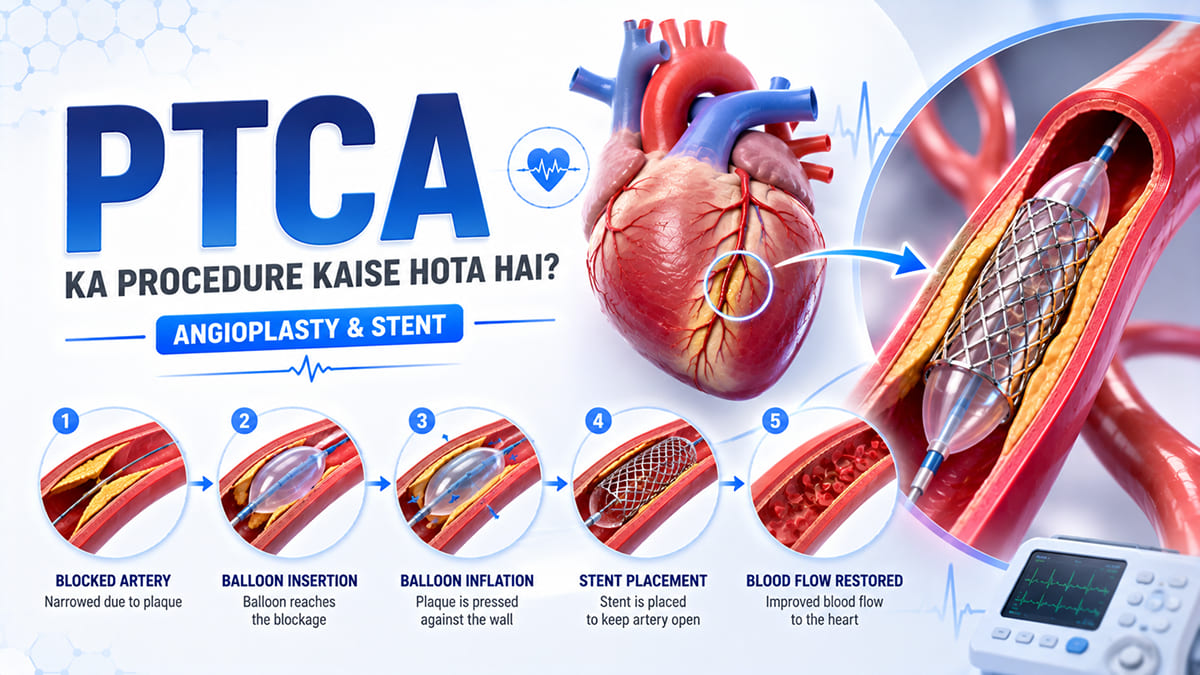
Percutaneous Transluminal Coronary Angioplasty (PTCA), commonly known simply as Angioplasty or getting a "heart stent" (chhalla), is a life-saving, minimally invasive procedure. It is performed in a Cardiac Cath Lab to open up blocked or narrowed coronary arteries, restoring normal blood flow to the heart muscle. It is the primary emergency treatment for a heart attack (Myocardial Infarction).
How Does a Heart Blockage Form?
Over years of poor diet, smoking, or genetic factors, cholesterol and fat build up on the inner walls of the arteries supplying the heart. This buildup forms a hard plaque (Atherosclerosis). If this plaque ruptures, a blood clot forms instantly, completely blocking the artery and stopping oxygen from reaching the heart.
The PTCA Procedure Step-by-Step
Unlike open-heart surgery, PTCA does not require opening the chest. The entire procedure is done through a tiny puncture in the wrist or groin.
- Local Anesthesia and Access: The cardiologist numbs the patient's wrist (radial artery) or groin (femoral artery) and inserts a small plastic tube called a sheath.
- Catheter Insertion: A long, thin, flexible tube (guide catheter) is carefully threaded through the blood vessels all the way up to the heart.
- Angiography (Finding the Blockage): A special contrast dye is injected through the catheter. X-ray imaging (fluoroscopy) is used to see exactly where the blockages are and how severe they are.
- Balloon Inflation: A very thin guide wire is pushed through the blockage. Over this wire, a tiny, deflated balloon is advanced right into the center of the plaque. The doctor inflates the balloon with high pressure, which crushes the cholesterol plaque flat against the artery walls, opening the vessel.
- Stent Placement (Chhalla): To prevent the artery from collapsing again, a Coronary Stent (a tiny expandable metal mesh tube) is placed over the balloon. When the balloon inflates, the stent expands and locks tightly into the artery wall. The balloon is removed, but the stent stays in the heart permanently, keeping the artery wide open.
Post-Procedure Care
After a successful PTCA, the patient feels immediate relief from chest pain. To ensure the new stent doesn't get blocked by blood clots, the patient must strictly take antiplatelet medications (like Aspirin and Clopidogrel) exactly as prescribed by their cardiologist.
Types of Coronary Stents
Most modern angioplasty procedures use drug-eluting stents. These stents slowly release medication that reduces tissue overgrowth inside the artery, lowering the chance of restenosis, or re-narrowing. Bare-metal stents are used less often today but may still be chosen in selected cases. The cardiologist decides based on artery size, bleeding risk, blockage pattern, heart attack severity, and whether the patient can safely continue dual antiplatelet therapy after the procedure.
Recovery, Risks, and Lifestyle After PTCA
After PTCA, nurses monitor the access site for bleeding, swelling, hematoma, distal pulse, skin color, pain, and signs of reduced circulation. Chest pain, sudden breathlessness, abnormal ECG changes, or falling blood pressure must be reported immediately. Long-term success depends on controlling the disease that caused the blockage. Patients should stop smoking, control blood pressure and diabetes, take statins and antiplatelets as prescribed, follow a heart-healthy diet, exercise through cardiac rehabilitation, and attend regular cardiology follow-up. A stent opens one blockage, but lifestyle and medicines protect the whole coronary circulation.