
What is PCOS? | PCOS Symptoms & Causes | Why 1 in 5 Women Have It!
What is PCOS? Symptoms, Causes, and the Science Behind Why 1 in 5 Women Have It In modern gynecology and endocrinology, few conditions are as misunderstood, under...
Medically Reviewed By
Medscope Editorial Team Verified
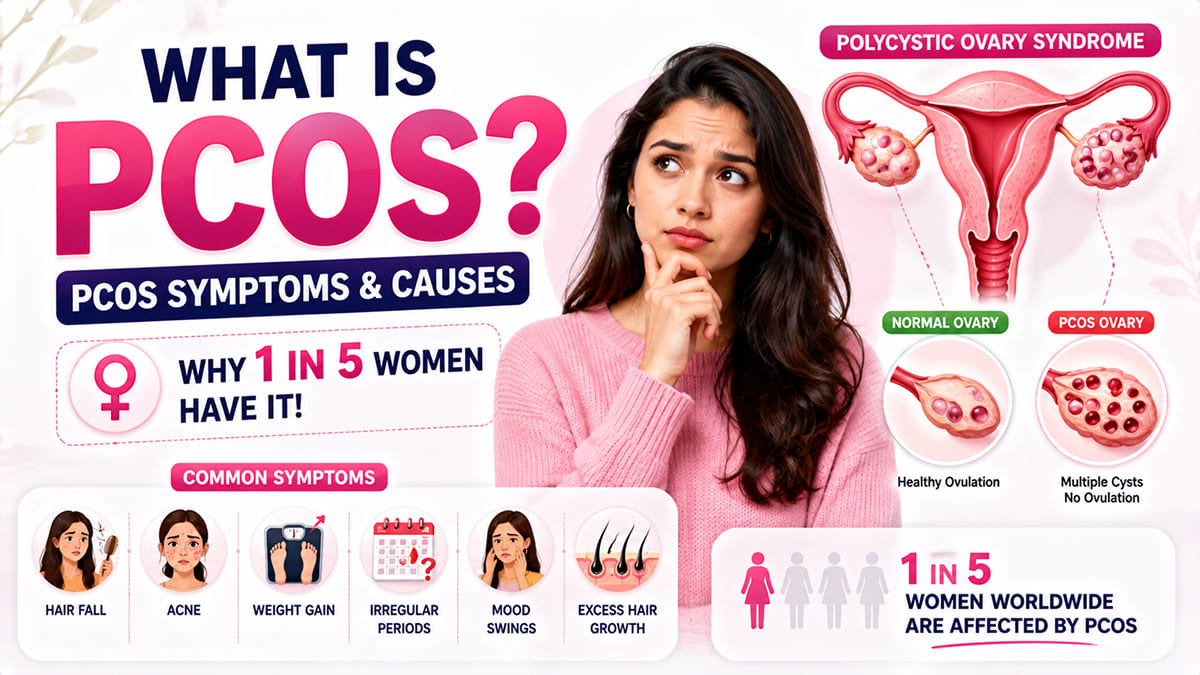
What is PCOS? Symptoms, Causes, and the Science Behind Why 1 in 5 Women Have It
In modern gynecology and endocrinology, few conditions are as misunderstood, underdiagnosed, and frustrating for patients as Polycystic Ovary Syndrome (PCOS). Medical statistics reveal a staggering and alarming truth: Worldwide, approximately 1 in every 5 women of reproductive age is silently battling this complex disorder. Despite its high prevalence, many women suffer for years with unexplained weight gain, severe acne, and irregular menstrual cycles before receiving an accurate diagnosis.
So, what exactly is happening inside the female body during PCOS? Is it a disease of the reproductive system, or is there something much deeper at play? To truly understand Polycystic Ovary Syndrome, we must take a 3D medical journey into the female endocrine system, exploring how a microscopic imbalance in hormones can trigger a massive cascade of physiological chaos.
The Core Problem: A Hormonal Imbalance (The Androgen Excess)
To understand PCOS, we must first dispel a common medical myth: PCOS is not primarily a disease of the ovaries themselves. Rather, it is a severe, systemic Endocrine (Hormonal) Disorder. The root cause of the chaos lies in the massive overproduction of specific chemical messengers in the blood.
Under normal physiological conditions, a healthy female body produces large amounts of female sex hormones (Estrogen and Progesterone) and very tiny, trace amounts of male sex hormones known as Androgens (such as Testosterone). In a woman suffering from PCOS, this delicate chemical balance completely shatters. The ovaries, and sometimes the adrenal glands, begin to aggressively overproduce Androgens. This hyperandrogenism (excess male hormones in a female body) acts as the primary biochemical trigger that severely disrupts the entire reproductive cycle.
The Ovulation Breakdown: How Cysts Are Formed
To understand the name "Polycystic" (meaning "many cysts"), we must look at the normal biology of a woman's menstrual cycle. Every month, inside the ovaries, several microscopic sacs called follicles begin to grow. Each follicle contains an immature egg. Usually, midway through the cycle, one dominant follicle matures fully, bursts open, and releases a healthy, mature egg into the fallopian tube. This crucial process is called Ovulation.
However, in a body battling PCOS, the high levels of male hormones (Androgens) act like a chemical roadblock. They severely suppress the normal development of the follicles. The follicles begin to grow, but the androgen overload prevents them from ever maturing fully. Because they cannot mature, they fail to burst open, and Ovulation never occurs (Anovulation).
Instead of releasing an egg, these immature, failed follicles remain trapped just beneath the surface of the ovary. They fill with fluid and swell, transforming into multiple small sacs known as Cysts. Over time, the ovaries become enlarged and completely covered in these "strings of pearls," hence the medical diagnosis: Polycystic Ovary Syndrome.
The Invisible Engine: Insulin Resistance
While excess androgens cause the physical cysts, medical science asks another vital question: What causes the body to produce too many androgens in the first place? In up to 70% to 80% of all PCOS cases, the true, hidden engine driving the disease is a metabolic condition called Insulin Resistance.
Insulin is a powerful hormone produced by the pancreas. Its job is to act like a biological key, unlocking your cells so they can absorb glucose (sugar) from your blood and use it for energy. In women with Insulin Resistance, the cellular locks become stubborn and refuse to open. Because the cells are starving for energy, the pancreas panics and pumps out massive, excessive amounts of insulin into the bloodstream.
This Hyperinsulinemia (extremely high blood insulin levels) is highly destructive. The excess insulin travels directly to the ovaries and acts as a direct chemical stimulant, violently forcing the ovarian Theca cells to massively ramp up their production of Androgens. Therefore, for many women, PCOS is actually a metabolic blood-sugar issue masquerading as a reproductive issue.
The Devastating Symptoms of PCOS
Because hormones dictate almost every function in the human body, the symptoms of PCOS are systemic, highly distressing, and vary wildly from woman to woman. The most common clinical signs include:
- Irregular or Absent Periods: Because ovulation fails to occur, the uterine lining does not shed normally. A woman with PCOS may have fewer than eight periods a year, or their periods may stop completely for months at a time.
- Hirsutism (Excess Hair Growth): The high levels of male hormones (testosterone) overstimulate the hair follicles. Women often develop thick, dark hair on their face (chin and upper lip), chest, stomach, and back.
- Severe Cystic Acne: Androgens overstimulate the sebaceous glands in the skin, causing them to produce massive amounts of heavy oil (sebum), leading to painful, deep cystic acne, particularly along the jawline and neck.
- Sudden, Unexplained Weight Gain: Due to the underlying severe insulin resistance, the body struggles to process carbohydrates properly. The excess blood sugar is rapidly converted and stored as stubborn visceral fat, particularly around the abdomen. Worse, the insulin resistance makes it incredibly difficult for the patient to lose this weight, no matter how hard they diet.
- Male-Pattern Baldness: While excess hair grows on the body, the high androgens can cause the hair on the scalp to thin dramatically, specifically near the front hairline.
Management and Hope: Controlling the Syndrome
Currently, there is no permanent "cure" for PCOS, but medical science proves that it can be highly successfully managed and controlled. The primary goal of treatment is to break the vicious cycle of insulin resistance and androgen excess.
For a vast majority of women, Lifestyle Modification is the first and most powerful line of medical defense. Transitioning to a low-glycemic index (low sugar/low carb) diet prevents massive insulin spikes. Engaging in regular resistance training (weightlifting) makes the muscle cells highly sensitive to insulin again, drastically lowering insulin levels in the blood. When insulin levels drop, the ovaries stop overproducing androgens, and normal ovulation can often resume naturally.
If lifestyle changes are not enough, gynecologists and endocrinologists can prescribe targeted medications. Metformin is widely used to artificially lower insulin resistance. Hormonal birth control pills are frequently prescribed to provide the missing estrogen and progesterone, forcing the body into a regular menstrual rhythm and suppressing the painful cysts.
Conclusion
Polycystic Ovary Syndrome is far more than just irregular periods; it is a complex metabolic and endocrine battle happening deep within a woman's biochemistry. If you are experiencing unexplained weight gain, sudden severe acne, or missing periods, do not suffer in silence and do not ignore the symptoms. Consult a medical professional for a proper hormonal blood panel and an ultrasound. Armed with the right medical knowledge, proper nutrition, and targeted therapy, PCOS can be controlled, allowing women to reclaim their health, fertility, and quality of life.
For more fascinating 3D anatomical journeys and deep dives into medical science and women's health, make sure to subscribe to Medscope Visuals on YouTube! Let us know in the comments which bodily function or medical condition you want us to explain in 3D next!