
DABDA: 5 Stages of Grief Explained | Kübler-Ross Model (3D Animation)
The Kübler-Ross Model: Understanding the 5 Stages of Grief Grief is a profound and deeply personal psychological response to loss, terminal illness, or drastic li...
Medically Reviewed By
Medscope Editorial Team Verified
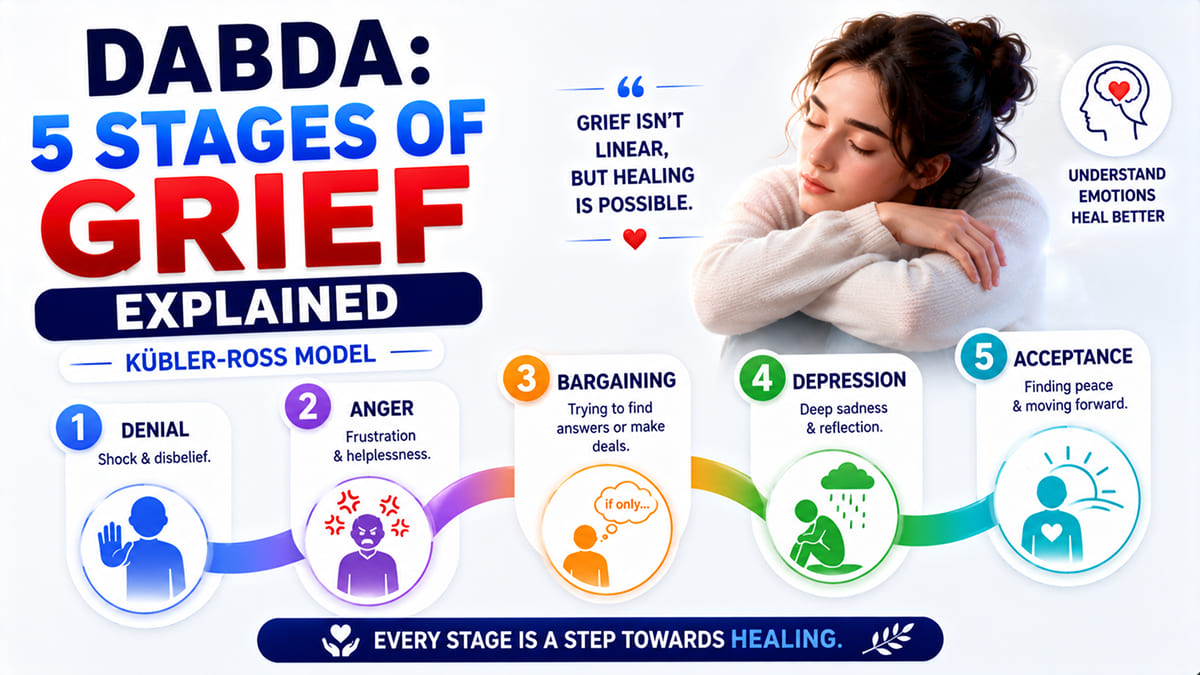
The Kübler-Ross Model: Understanding the 5 Stages of Grief
Grief is a profound and deeply personal psychological response to loss, terminal illness, or drastic life changes. In 1969, psychiatrist Elisabeth Kübler-Ross introduced a framework to help healthcare professionals, patients, and families understand the emotional processing of trauma. This framework is universally known as the Five Stages of Grief, often remembered by the acronym DABDA.
What is DABDA? (The 5 Stages)
It is important for nursing students and counselors to note that these stages are not strictly linear. A person can jump back and forth between stages or skip some entirely. The five stages are:
- D - Denial: "This cannot be happening to me." This is a common defense mechanism. The mind refuses to accept the reality of the diagnosis or loss to buffer the immediate shock.
- A - Anger: "Why is this happening? Who is to blame?" As denial fades, reality sets in, often accompanied by intense frustration and helplessness. This anger can be directed at doctors, family members, a higher power, or even oneself.
- B - Bargaining: "If I survive this, I promise to be a better person." In this stage, individuals attempt to regain control. They may try to negotiate with a higher power to postpone the inevitable or change the outcome.
- D - Depression: "I am so sad, why bother with anything?" This is the phase of deep mourning. The individual fully realizes the certainty of the loss and experiences profound sadness, isolation, and quiet withdrawal.
- A - Acceptance: "I am ready for what comes next." Acceptance does not mean the person is "happy" about the loss. Instead, they have made peace with reality and are learning to live and move forward with the new normal.
Clinical Nursing Considerations
When providing palliative or end-of-life care, nurses must assess which stage the patient or family is experiencing. The goal is never to force someone to move to the next stage, but rather to provide active listening, empathy, and a safe, non-judgmental environment to process their unique emotional journey.
Important Misconceptions About the 5 Stages of Grief
The Kubler-Ross model is a helpful teaching framework, but it should not be treated like a strict checklist. Real grief is messy and individual. A patient may feel anger and acceptance on the same day, return to denial after receiving new information, or experience depression before bargaining. Some people do not express grief openly at all, especially if culture, family role, or personality encourages emotional control. This does not mean they are coping incorrectly.
How Nurses and Caregivers Can Support Grieving Patients
- Use Presence: Sitting quietly with a patient can be more therapeutic than giving forced advice.
- Validate Feelings: Statements like "This sounds very difficult" are safer than "You need to be strong."
- Assess Risk: Watch for suicidal thoughts, inability to function, severe withdrawal, or complicated grief that needs mental health referral.
- Include Family: Families also grieve and may need education about prognosis, comfort care, and realistic expectations.
The purpose of DABDA is not to label people, but to help healthcare workers respond with patience, empathy, and better communication.