
Trauma aapke Brain ko kaise Hijack karta hai? | Amygdala Hijack Explained
What is an Amygdala Hijack? Trauma and the Brain Have you ever reacted to a stressful situation with sudden, explosive anger or extreme panic, only to wonder late...
Medically Reviewed By
Medscope Editorial Team Verified
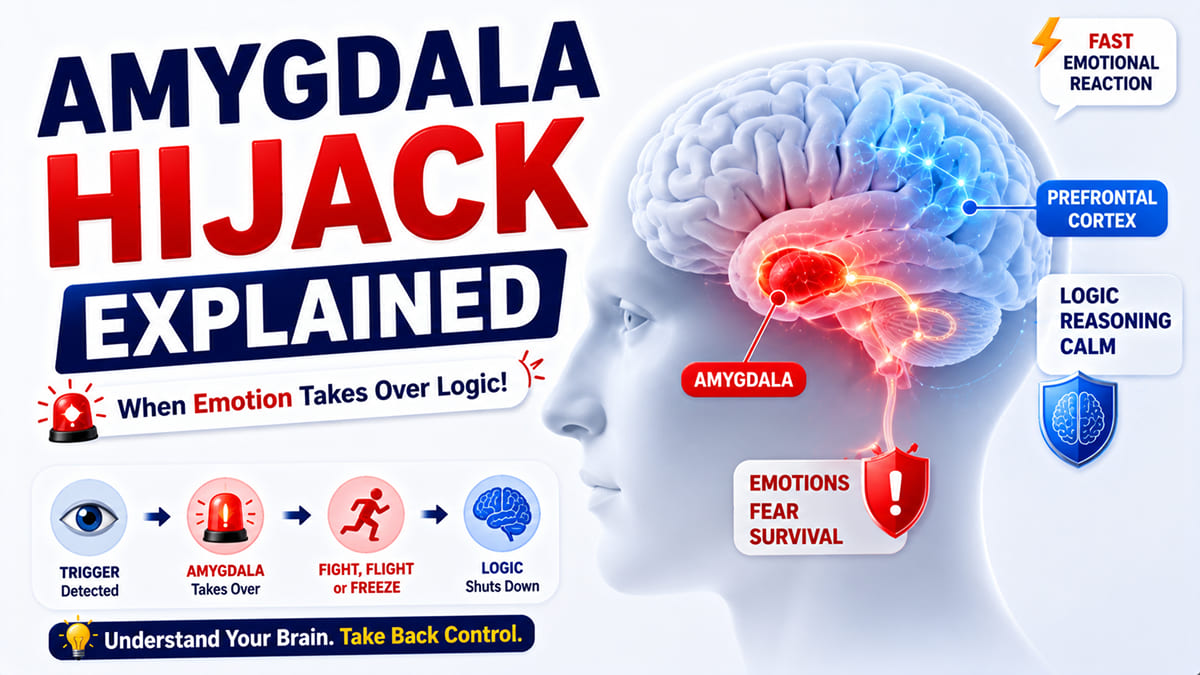
What is an Amygdala Hijack? Trauma and the Brain
Have you ever reacted to a stressful situation with sudden, explosive anger or extreme panic, only to wonder later, "Why did I act like that?" In psychology and neuroscience, this sudden loss of rational control is known as an Amygdala Hijack. This term, coined by psychologist Daniel Goleman, perfectly describes how severe stress or trauma can physically override the logical part of your brain.
The Two Key Players: Amygdala vs. Prefrontal Cortex
To understand the hijack, you need to know about two specific regions of the human brain:
- The Prefrontal Cortex (The Logical Boss): Located right behind your forehead, this is the advanced, rational part of the brain. It handles logical thinking, impulse control, decision-making, and understanding consequences.
- The Amygdala (The Alarm System): Located deep inside the brain's temporal lobe, this small, almond-shaped structure is the primitive emotional center. Its primary job is survival. It constantly scans your environment for danger and triggers the "Fight, Flight, or Freeze" response.
The Mechanics of the Hijack
Normally, when you encounter a problem, the sensory information goes to the Amygdala, but it also goes to the Prefrontal Cortex, which says, "Calm down, let's think about this logically."
However, during an intense threat (or a trigger related to past trauma), the Amygdala perceives immediate, life-threatening danger. It works milliseconds faster than the rational brain. The Amygdala sounds a massive chemical alarm, flooding the body with adrenaline and cortisol (stress hormones).
This massive hormone dump effectively shuts off the Prefrontal Cortex. Your logical brain is literally disconnected. You can no longer think rationally or control your impulses. The Amygdala has successfully "hijacked" the brain, forcing you to fight, run away, or freeze in terror to survive.
Trauma and PTSD Pathophysiology
For individuals who have experienced severe trauma (such as physical abuse, accidents, or combat), the Amygdala becomes hyper-sensitized. In Post-Traumatic Stress Disorder (PTSD), the alarm system is broken. Even a minor, non-threatening trigger (like a loud noise, a specific smell, or a stressful conversation) can trick the Amygdala into thinking the original trauma is happening all over again.
Therapy for trauma (like CBT or EMDR) focuses on rewiring the brain, helping to strengthen the Prefrontal Cortex and teaching the Amygdala that the danger has passed, returning the control back to the logical mind.
Physical Signs of an Amygdala Hijack
An amygdala hijack is not just an emotional reaction; it is a full-body stress response. Common signs include a racing heartbeat, tight chest, shallow breathing, sweating, trembling, clenched jaw, stomach discomfort, tunnel vision, and difficulty speaking clearly. The person may say things they do not mean, freeze in silence, leave the room suddenly, or become defensive. These reactions happen because adrenaline redirects blood flow toward large muscles and away from slow, reflective thinking. In that moment, the brain is prioritizing survival over social logic.
How to Calm the Brain During a Trigger
The first goal is to signal safety to the nervous system. Slow exhalation breathing, grounding techniques, naming five things you can see, relaxing the shoulders, drinking water, or stepping into a quieter space can help the prefrontal cortex come back online. After the body settles, reflection becomes easier: What triggered me? What did I feel in my body? Was the danger real or connected to an old memory? For repeated panic, rage episodes, flashbacks, or avoidance behavior, professional trauma-informed therapy is important. The goal is not to suppress emotions, but to rebuild the brain's ability to pause, assess, and respond with control.