
Emergency Antidotes Explained in 3D | Naloxone, NAC, Protamine, Calcium Gluconate
What are Emergency Antidotes? In emergency medicine and intensive care, accidental medication overdoses or toxicities are a common presentation. An antidote is a...
Medically Reviewed By
Medscope Editorial Team Verified
What are Emergency Antidotes?
In emergency medicine and intensive care, accidental medication overdoses or toxicities are a common presentation. An antidote is a specific medication or chemical agent that reverses the toxic effects of a particular drug or poison. Memorizing these antidotes is essential for nursing students, pharmacists, and medical professionals to act rapidly in life-threatening situations.
Common Toxicities and Their Specific Antidotes
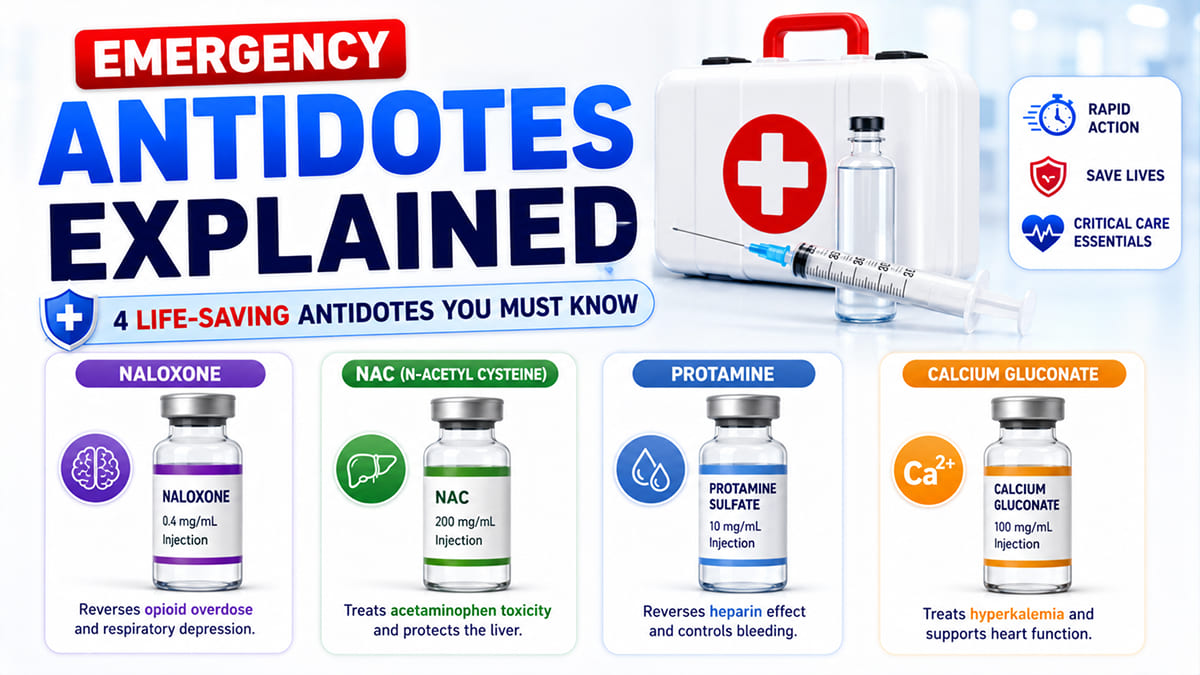
Here is a clinical guide to four critical emergency antidotes and their mechanism of action:
1. Opioid Overdose: Naloxone (Narcan)
Opioids like morphine, fentanyl, and heroin bind to opioid receptors in the brain, which can cause profound central nervous system (CNS) and respiratory depression. Naloxone is a powerful opioid antagonist. It rapidly knocks the opioid molecules off the receptors, instantly reversing respiratory depression and restoring normal breathing.
2. Acetaminophen (Paracetamol) Toxicity: Acetylcysteine (NAC)
An overdose of paracetamol is highly toxic to the liver and can cause acute hepatic failure. It depletes glutathione, an essential antioxidant in the liver. N-Acetylcysteine (NAC) acts as an antidote by replenishing glutathione stores, allowing the liver to safely detoxify and excrete the toxic paracetamol metabolites.
3. Heparin Toxicity: Protamine Sulfate
Heparin is a powerful anticoagulant (blood thinner) used to treat and prevent deep vein thrombosis (DVT) and pulmonary embolism. If a patient receives too much Heparin, they face severe bleeding risks. Protamine Sulfate is the specific antidote. It is a positively charged protein that binds with the negatively charged heparin molecules, neutralizing its blood-thinning effect immediately.
4. Magnesium Sulfate Toxicity: Calcium Gluconate
Magnesium sulfate is commonly given to pregnant women to prevent seizures in severe pre-eclampsia. However, magnesium toxicity can lead to the loss of deep tendon reflexes and fatal respiratory arrest. Calcium Gluconate is the antidote. Calcium directly antagonizes the effects of magnesium at the neuromuscular junction, restoring muscle and respiratory function.
More High-Yield Antidotes for Exams and Emergency Care
- Benzodiazepine Overdose: Flumazenil can reverse benzodiazepine sedation, but it must be used carefully because it may trigger seizures in dependent patients.
- Warfarin Toxicity: Vitamin K helps restore clotting factor production, while severe bleeding may require prothrombin complex concentrate or fresh frozen plasma as ordered.
- Iron Poisoning: Deferoxamine binds excess iron and helps remove it from the body.
- Digoxin Toxicity: Digoxin immune Fab is the specific antidote for life-threatening arrhythmias or severe toxicity.
- Organophosphate Poisoning: Atropine treats muscarinic symptoms, and pralidoxime helps reactivate acetylcholinesterase if given early.
Emergency Nursing Priorities
Antidote knowledge is important, but the first priority in any poisoning case remains ABC: airway, breathing, and circulation. Check oxygen saturation, respiratory effort, blood pressure, ECG rhythm, neurological status, blood glucose, and time of ingestion. Preserve pill strips or poison containers, estimate the dose, and report the exact timing to the emergency team. Many antidotes are time-sensitive, so early recognition and rapid escalation can prevent liver failure, respiratory arrest, fatal arrhythmias, or uncontrolled bleeding. Never administer an antidote casually; dose, route, contraindications, and monitoring requirements must follow emergency protocols.
For exam preparation, learn antidotes in pairs with their toxicity signs. For example, opioid overdose means respiratory depression plus pinpoint pupils; magnesium toxicity means absent reflexes and slow breathing; heparin toxicity means bleeding; and paracetamol toxicity may look mild at first but can progress to severe liver injury.