
Sirf 1 Tablet Bacteria ko kaise khatam karti hai? | Azithromycin 3D Animation
How Antibiotics Work: The Mechanism of Azithromycin Azithromycin is one of the most widely prescribed antibiotics in the world, commonly used to treat respiratory...
Medically Reviewed By
Medscope Editorial Team Verified
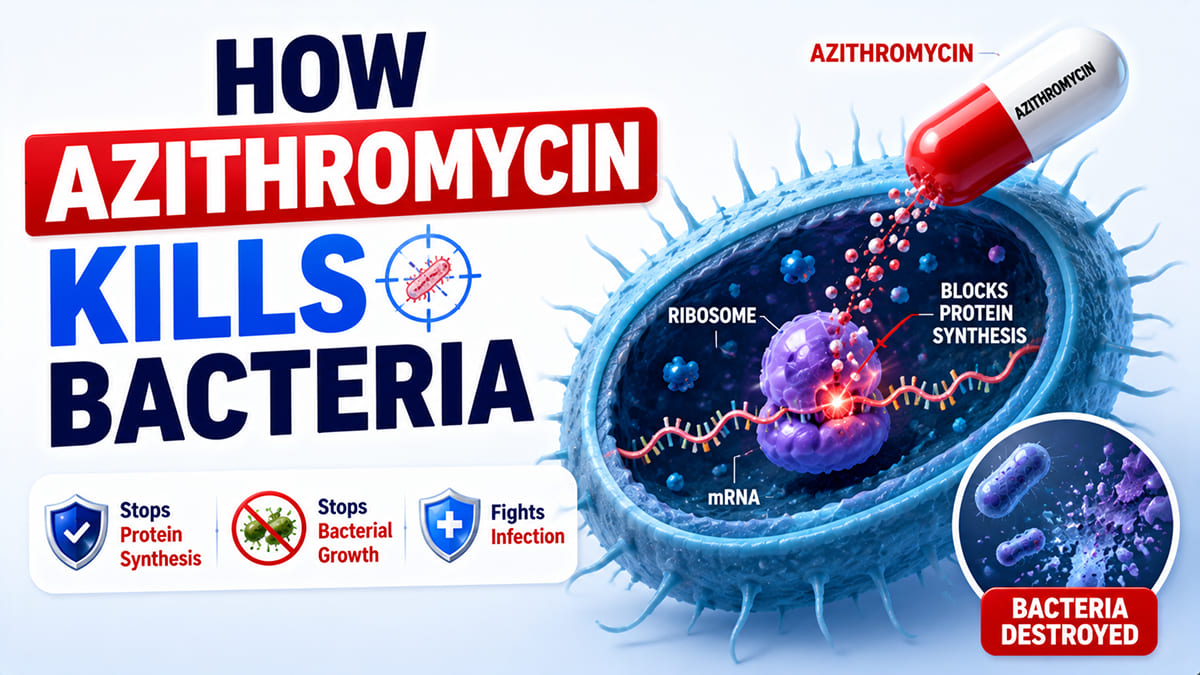
How Antibiotics Work: The Mechanism of Azithromycin
Azithromycin is one of the most widely prescribed antibiotics in the world, commonly used to treat respiratory infections, ear infections, and certain sexually transmitted diseases. But how does swallowing a single tablet actually seek out and destroy bacteria in your body without harming your own human cells? The answer lies in the microscopic machinery of the bacterial cell.
The Target: Bacterial Ribosomes
To survive, grow, and multiply, a bacteria cell must constantly build new proteins. Proteins act as the structural building blocks and enzymes for the bacteria. The "factories" inside the bacteria that manufacture these proteins are called Ribosomes.
Here is where human biology and bacterial biology differ: Human ribosomes and bacterial ribosomes have different shapes and structures. Bacterial ribosomes are composed of two specific subunits called the 30S and the 50S subunit. Because human ribosomes have a different structure, antibiotics can target the bacterial factories without touching human cells.
The Mechanism of Action: Protein Synthesis Inhibition
Azithromycin belongs to a class of antibiotics known as Macrolides. Here is the exact mechanism of how it stops an infection:
- When you take Azithromycin, the drug is absorbed into your bloodstream and travels to the site of the infection.
- The antibiotic molecule enters the bacterial cell and binds tightly to the 50S subunit of the bacterial ribosome.
- By binding to this exact spot, Azithromycin acts like a physical roadblock. It jams the machinery, making it impossible for the ribosome to add new amino acids to the growing protein chain.
- This process is called inhibition of bacterial protein synthesis.
Bacteriostatic vs. Bactericidal
Because the bacteria can no longer build the proteins it needs to divide and replicate, its growth is completely halted. Drugs like Azithromycin are primarily bacteriostatic, meaning they stop the bacteria from reproducing rather than instantly exploding them.
By pausing the bacterial army's growth, Azithromycin gives your body's natural immune system (white blood cells) the time and upper hand needed to hunt down and completely clear out the remaining trapped bacteria, curing the infection.
Why Azithromycin Does Not Work for Every Infection
Azithromycin is an antibiotic, so it works against susceptible bacteria, not viruses. It will not cure viral colds, influenza, most sore throats, or viral bronchitis. Using it when it is not needed exposes normal bacteria to the drug and encourages antibiotic resistance. Resistance means bacteria learn to survive the medicine, making future infections harder to treat. This is why healthcare providers decide antibiotic choice based on the likely organism, infection site, local resistance patterns, allergy history, pregnancy status, and severity of illness.
Important Patient Education Points
- Complete the Course: Do not stop early just because symptoms improve, unless a doctor tells you to stop.
- Watch Side Effects: Nausea, loose stool, abdominal pain, and mild headache can occur. Severe allergy, breathing difficulty, facial swelling, or severe diarrhea needs urgent medical advice.
- Drug Interactions: Patients with heart rhythm problems, liver disease, or medicines that prolong QT interval should inform their clinician before taking azithromycin.
- Right Diagnosis Matters: Antibiotics should be taken only with a proper prescription and correct dose schedule.
Understanding the mechanism of azithromycin helps students remember both its power and its limits: it blocks bacterial protein production, but responsible use is essential to protect antibiotic effectiveness.