
Cancer Body Me Kaise Shuru Hota Hai? | How Cancer Spreads (3D Animation)
How Does Cancer Start? The Biology of a Mutated Cell The human body is an incredibly complex machine made up of over 30 trillion individual cells. Under normal, h...
Medically Reviewed By
Medscope Editorial Team Verified
How Does Cancer Start? The Biology of a Mutated Cell
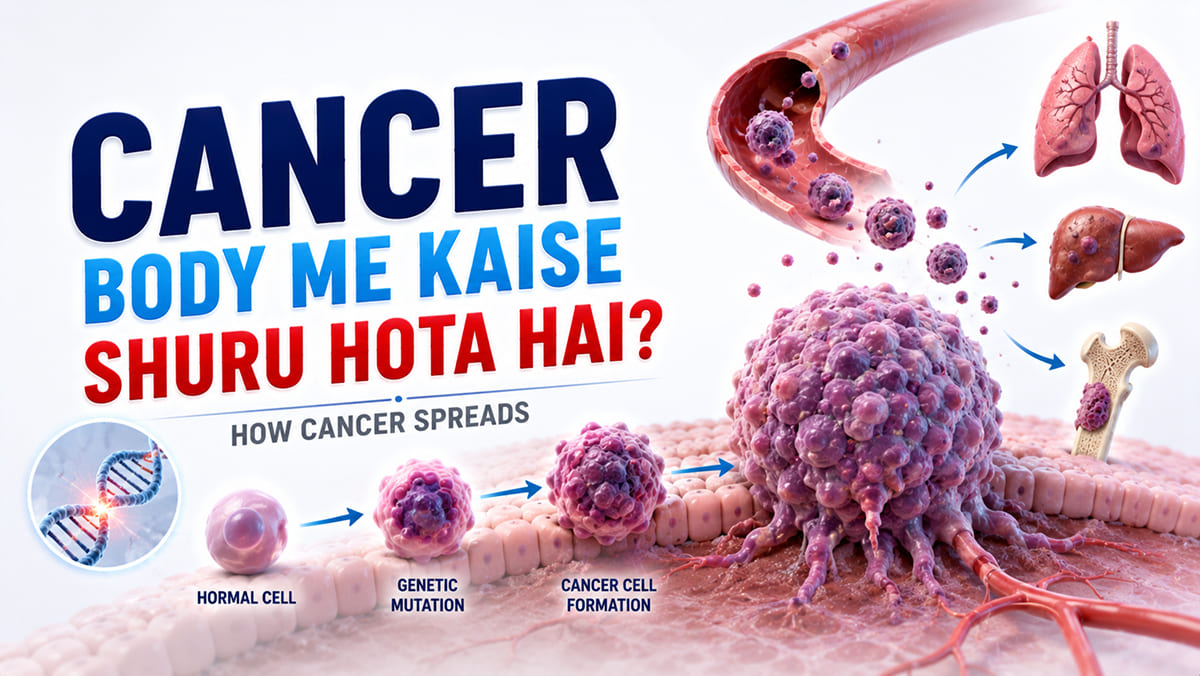
The human body is an incredibly complex machine made up of over 30 trillion individual cells. Under normal, healthy physiological conditions, these cells follow a very strict, biologically programmed rulebook. They grow, divide to replace old or damaged cells, and then eventually die in a highly controlled process of cellular suicide known as Apoptosis. Cancer is not a foreign invader like a virus or bacteria; rather, cancer begins when your own cells throw this rulebook out the window.
The spark that starts cancer always happens at the genetic level. When the DNA inside a single cell is severely damaged—by environmental carcinogens (like tobacco smoke, asbestos, or UV radiation), viral infections (like HPV), or inherited genetic flaws—the specific genes that control cell division malfunction. The oncogenes (which tell cells to divide) get permanently stuck in the "ON" position, and the tumor suppressor genes (like the p53 gene, which tells cells to stop dividing or die) get broken. Instead of dying, this rogue, mutated cell begins to multiply uncontrollably, rapidly forming a solid mass of abnormal cells called a Tumor.
Benign vs. Malignant Tumors: Understanding the Difference
Not all tumors are cancerous. It is highly important for patients to understand the difference between the two primary types of tumors:
- Benign Tumors: These are non-cancerous masses. They usually grow very slowly and are surrounded by a fibrous capsule. This capsule prevents them from invading surrounding healthy tissues. Once surgically removed, benign tumors rarely grow back.
- Malignant Tumors: These are true, aggressive cancers. Malignant cells are disorganized, grow rapidly, and lack any protective capsule. They possess the dangerous biological ability to release enzymes that dissolve surrounding tissues, allowing them to aggressively invade and destroy adjacent healthy organs.
Tumor Angiogenesis: Feeding the Growing Monster
As a malignant tumor grows, it faces a major biological problem: it needs massive amounts of oxygen and glucose to survive. A tumor cannot grow larger than 1 to 2 millimeters without its own dedicated blood supply. To solve this problem, cancer cells are incredibly deceptive.
The tumor releases powerful chemical signals (such as Vascular Endothelial Growth Factor, or VEGF) into the surrounding tissue. These chemicals literally trick the body into growing brand new, dedicated blood vessels directly into the tumor. This process is called Tumor Angiogenesis. By establishing its own blood supply network, the tumor can now steal vital nutrients from the rest of the body, allowing it to grow massively in size.
Metastasis: The Deadly Spread of Cancer
The single most deadly and terrifying aspect of cancer is its ability to spread. If a tumor stayed in one place, surgeons could easily cut it out. However, cancer kills because of Metastasis—the complex process by which cancer spreads from its original (primary) site to completely different, distant organs in the body. Here is how the metastatic cascade happens step-by-step:
- Invasion (Detachment): Cancer cells lose the "biological glue" (E-cadherin) that holds them together. A few rogue cells break away from the primary tumor and physically push their way through the walls of nearby healthy tissues.
- Intravasation: The breakaway cells locate the nearby blood vessels (or lymphatic vessels) that were created during angiogenesis. They squeeze through the walls of these vessels, officially entering the body's superhighways.
- Circulation and Evasion: The cancer cells travel through the bloodstream. This is a very hostile environment. The physical pressure of blood flow and attacks from the body's immune system (like Natural Killer cells) destroy over 99% of these traveling cancer cells. However, a few survivors manage to coat themselves in platelets, hiding from the immune system.
- Extravasation and Colonization: The surviving cancer cells eventually get stuck in the tiny capillary beds of a distant organ. They exit the bloodstream, lodge into the new tissue, and begin multiplying all over again, forming secondary tumors (metastases).
Common Sites of Metastasis
Cancer does not spread randomly; different cancers prefer different organs, based on blood flow and biological compatibility (the "Seed and Soil" theory). The most common sites for metastatic colonization are the Liver, Lungs, Brain, and Bones. Understanding how cancer starts, feeds itself, and spreads is the absolute foundation of modern oncology, driving the development of targeted therapies like angiogenesis inhibitors and immunotherapies.