
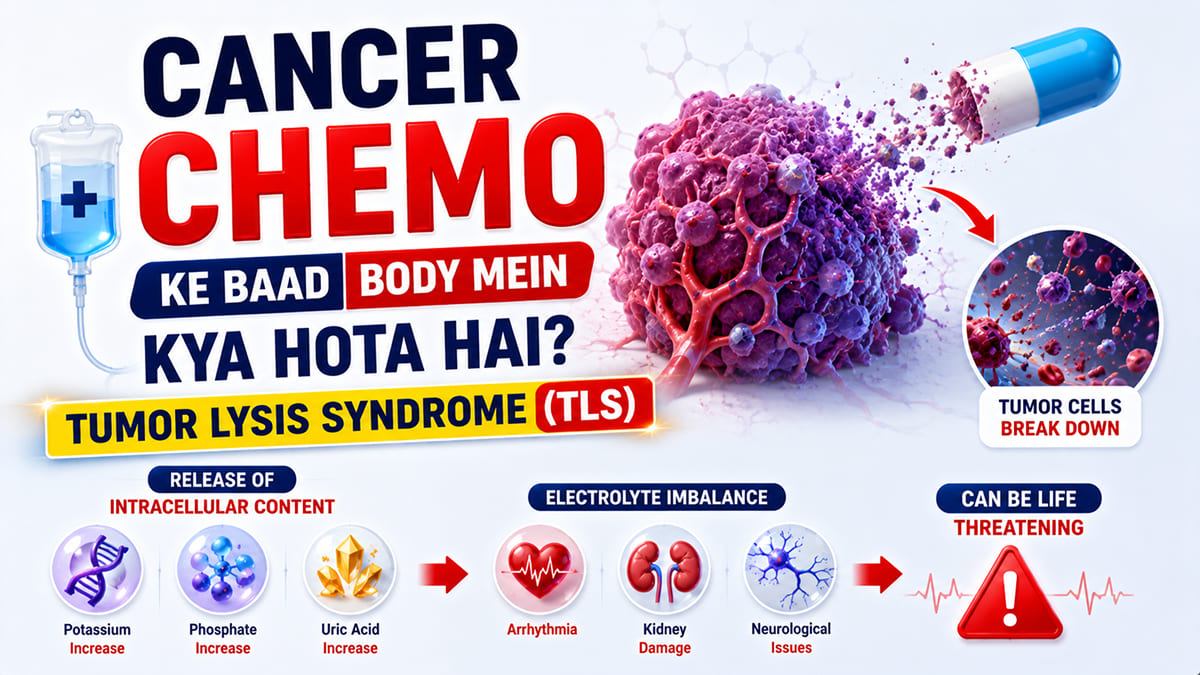
Cancer Chemo ke baad Body mein kya hota hai? | Tumor Lysis Syndrome (TLS)
What is Tumor Lysis Syndrome (TLS)? A Comprehensive Clinical Overview Tumor Lysis Syndrome (TLS) is a massive, highly acute, and life-threatening oncologic emerge...
Medically Reviewed By
Medscope Editorial Team Verified
What is Tumor Lysis Syndrome (TLS)? A Comprehensive Clinical Overview
Tumor Lysis Syndrome (TLS) is a massive, highly acute, and life-threatening oncologic emergency that occurs most frequently in patients undergoing aggressive treatment for certain types of cancer. It is clinically characterized by a rapid, systemic, and overwhelming destruction of malignant cancer cells. When these immense numbers of cancer cells are destroyed rapidly by highly effective cytotoxic chemotherapy, targeted biologic therapies, or extensive radiation therapy, they violently burst open (lyse). As they lyse, they release their massive intracellular contents directly and rapidly into the systemic bloodstream. Because malignant cancer cells grow incredibly fast, they are heavily packed with intracellular ions (like potassium and phosphorus) and nucleic acids (DNA and RNA). This sudden, massive dumping of intracellular garbage completely overwhelms the body's normal homeostatic clearing mechanisms, particularly the delicate filtration system of the kidneys. If not recognized early, anticipated prophylactically, and treated aggressively, Tumor Lysis Syndrome will rapidly progress to severe acute kidney injury (AKI), devastating cardiac arrhythmias, neurological seizures, multi-organ failure, and ultimately, death.
Identifying High-Risk Cancers and Patients for TLS
While Tumor Lysis Syndrome can technically occur with the treatment of almost any solid or hematologic malignancy, it is overwhelmingly associated with cancers that possess a very high total tumor burden, phenomenally rapid cell turnover rates, and extreme sensitivity to chemotherapy. The classic, high-risk malignancies that oncology nurses and physicians must monitor closely include:
- Acute Lymphoblastic Leukemia (ALL): Particularly in pediatric populations, where the white blood cell count can be astronomically high.
- Acute Myeloid Leukemia (AML): High blast cell counts make these patients highly susceptible upon induction therapy.
- Burkitt Lymphoma: A highly aggressive, incredibly fast-growing B-cell non-Hodgkin lymphoma. It is so fast-growing that it is considered the textbook classic cause of TLS.
- High-grade Non-Hodgkin Lymphomas (NHL): Including diffuse large B-cell lymphoma.
Furthermore, it is critical to note that in rare but severe cases, TLS can actually occur spontaneously before any chemotherapy is even administered. This happens when a massive, incredibly fast-growing tumor simply begins to outgrow its own fragile blood supply, causing large swaths of necrotic cancer cells to break down and lyse naturally into the bloodstream.
The Deep Pathophysiology: The Deadly "Four" Electrolyte Imbalances
The entire clinical picture, morbidity, and mortality of Tumor Lysis Syndrome are driven entirely by the sudden, massive release of intracellular components. Medical professionals, nursing students, and oncologists must thoroughly understand the intricate pathophysiology behind the four hallmark metabolic derangements that universally define TLS:
1. Severe Hyperkalemia (Dangerously High Potassium)
Potassium is, by a massive margin, the most abundant intracellular cation in the human body. When billions of cancer cells violently rupture simultaneously, vast amounts of potassium flood the extracellular bloodstream. Normal, healthy kidneys can usually excrete excess dietary potassium over time, but the sheer, sudden volume of potassium released in TLS completely overwhelms them. Hyperkalemia is arguably the most dangerous and immediately life-threatening immediate complication of TLS because it profoundly alters the electrical resting membrane potential of the myocardium (the heart muscle). This electrical instability can trigger lethal cardiac arrhythmias almost without warning, such as Ventricular Tachycardia (V-Tach), Ventricular Fibrillation (V-Fib), and eventually, sudden cardiac asystole. Classic, early ECG changes that nurses must watch for include tall, peaked ("tent-like") T waves, prolonged PR intervals, and ultimately, widened QRS complexes that degrade into a sine wave pattern.
2. Severe Hyperuricemia (Dangerously High Uric Acid)
Cancer cells, because they replicate so rapidly, contain massive, disproportionate amounts of nucleic acids (DNA and RNA). When these malignant cells break down, the liver rapidly metabolizes the purine bases from the nucleic acids into uric acid. Uric acid is problematic because it has exceptionally low solubility in acidic environments. When this massive load of uric acid reaches the renal tubules of the kidneys, the high concentration combined with the naturally acidic nature of urine causes the uric acid to rapidly precipitate and crystallize. These sharp uric acid crystals physically jam and block the microscopic renal tubules, leading to acute uric acid nephropathy, severe inflammation, and rapidly progressive, anuric Acute Kidney Injury (AKI).
3. Severe Hyperphosphatemia (Dangerously High Phosphorus)
Malignant cancer cells hold up to four times more intracellular phosphorus than normal, mature, healthy cells. As these cells lyse during chemotherapy, this massive load of phosphate is dumped directly into the blood, causing severe hyperphosphatemia. On its own, high phosphorus causes unpleasant symptoms like severe nausea, vomiting, and muscle cramps. However, its true, lethal danger lies entirely in its complex physiological relationship with serum calcium.
4. Severe Hypocalcemia (Dangerously Low Calcium)
Phosphorus and calcium share a strict inverse relationship in the human bloodstream. As phosphate levels skyrocket during TLS, the excess, free-floating phosphate aggressively seeks out and actively binds to free serum calcium. This forms insoluble calcium-phosphate precipitates that deposit in soft tissues throughout the body (including the kidneys, worsening the AKI). This massive binding rapidly and severely drops the levels of free, physiologically active ionized calcium in the blood. Severe hypocalcemia causes intense, dangerous neuromuscular irritability. This manifests clinically as severe muscle tetany, a positive Chvostek's sign (facial nerve twitching), a positive Trousseau's sign (carpal spasm), severe muscle cramps, cardiac dysrhythmias (prolonged QT interval), and potentially fatal neurological seizures.
Advanced Clinical Management and Critical Nursing Interventions
The absolute key to surviving Tumor Lysis Syndrome is aggressive, proactive prevention before the very first drop of chemotherapy is even administered. Once TLS is in full swing, mortality rates skyrocket. For high-risk patients, medical and nursing management revolves heavily around three core, non-negotiable pillars:
- Aggressive Intravenous (IV) Hydration: This is the absolute, unquestionable cornerstone of TLS prevention and management. High-volume, aggressive intravenous fluids (often 2 to 3 liters per meter squared per day, or more, utilizing normal saline without potassium) are administered 24 to 48 hours before starting chemotherapy and continued intensely during treatment. Hydration massively expands the intravascular fluid volume, significantly increases renal blood flow, and maximizes the glomerular filtration rate (GFR). This high flow physically flushes the dangerous uric acid and phosphorus through the kidneys, diluting the urine and preventing the crystals from forming and causing physical blockages.
- Pharmacological Uric Acid Management (Allopurinol and Rasburicase): To prevent the deadly buildup of uric acid, specific medications are heavily utilized. Allopurinol is a prophylactic xanthine oxidase inhibitor; it stops the body from synthesizing new uric acid from the breakdown products, though it does nothing for uric acid that has already formed. Therefore, for patients who already have dangerously high baseline uric acid levels or are at extreme risk, a revolutionary, life-saving enzyme called Rasburicase is used. Rasburicase is a recombinant urate-oxidase enzyme that works like a chemical buzzsaw. It rapidly and directly converts existing, dangerous uric acid into allantoin, a highly water-soluble, harmless compound that the kidneys can easily and rapidly excrete, even if they are slightly compromised.
- Relentless Electrolyte Monitoring and Correction: Oncology and critical care nurses must draw and obsessively monitor basic metabolic panels (BMP), ionized calcium, uric acid, and phosphorus levels every 4 to 6 hours during high-risk induction periods. If hyperkalemia develops despite hydration, it must be treated as an immediate emergency. Interventions include medications that temporarily shift potassium back into cells (IV regular insulin paired with D50W dextrose, or Albuterol nebulizers), medications that stabilize the cardiac membrane (IV Calcium Gluconate), and medications that remove potassium from the body entirely (high-dose loop diuretics like Furosemide, or in severe, refractory cases, emergency hemodialysis).
In comprehensive summary, Tumor Lysis Syndrome is an entirely predictable, yet highly lethal, oncologic emergency. However, with meticulous patient risk assessment, hyper-aggressive prophylactic IV hydration, proper advanced pharmacology (like Rasburicase), and vigilant, minute-by-minute nursing monitoring, the devastating metabolic consequences of rapid cancer cell death can be safely and effectively managed, allowing the patient to survive their life-saving chemotherapy.