
Virchow's Triad: DVT Pathophysiology Explained | 3D Animation
Understanding Deep Vein Thrombosis (DVT) Deep Vein Thrombosis (DVT) is a serious medical condition that occurs when a blood clot (thrombus) forms in one or more o...
Medically Reviewed By
Medscope Editorial Team Verified
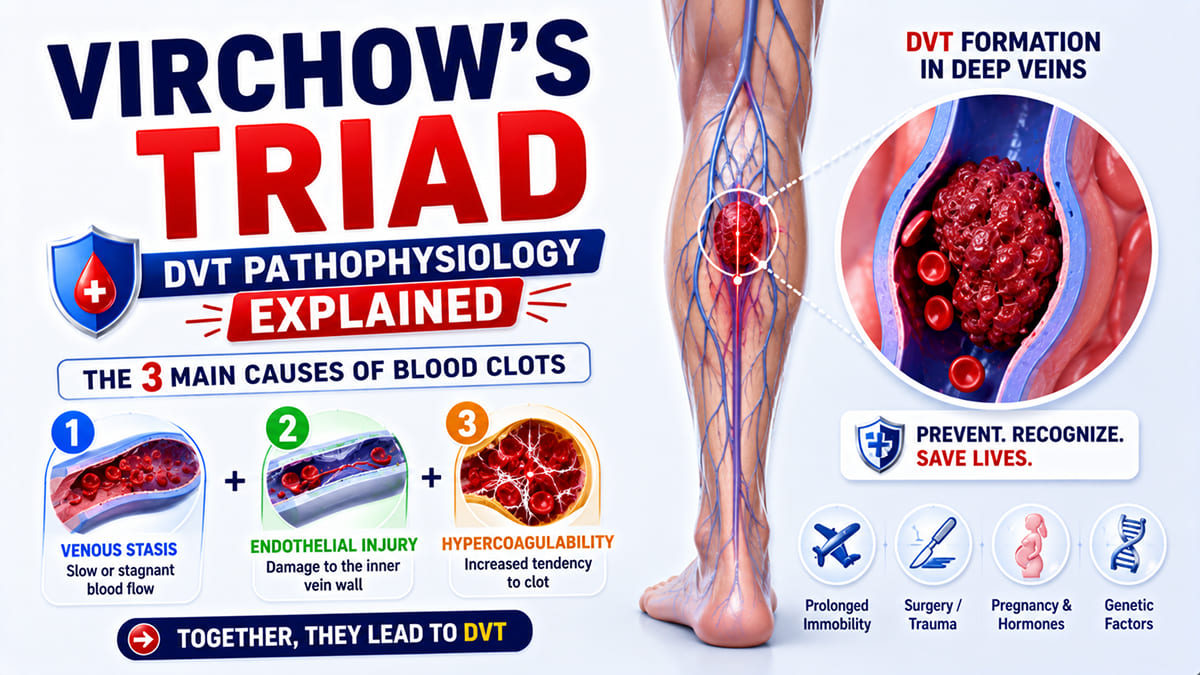
Understanding Deep Vein Thrombosis (DVT)
Deep Vein Thrombosis (DVT) is a serious medical condition that occurs when a blood clot (thrombus) forms in one or more of the deep veins in the body, most commonly in the legs or pelvis. The massive danger of a DVT is that a piece of the clot can break off (embolize), travel through the heart, and lodge in the lungs, causing a fatal Pulmonary Embolism (PE). To understand why DVTs form, the medical field relies on a pathophysiological concept known as Virchow's Triad.
What is Virchow's Triad?
Named after the renowned German physician Rudolf Virchow, the triad outlines the three primary physiological categories that contribute to abnormal blood clot formation (thrombosis). If a patient has one or more of these factors, their risk of DVT skyrockets:
1. Venous Stasis (Sluggish Blood Flow)
Blood is designed to keep moving. When blood flow slows down or pools in the veins, the clotting factors in the blood have time to stick together. Stasis is commonly caused by:
- Prolonged immobility (e.g., long bed rest after surgery, paralysis).
- Long-haul flights or car rides without moving the legs.
- Heart failure or atrial fibrillation (causing poor cardiac output).
2. Endothelial Injury (Vessel Wall Damage)
The inner lining of our blood vessels (endothelium) is extremely smooth, preventing platelets from sticking. However, if this wall is damaged, it exposes collagen, which immediately triggers the body's clotting cascade. Injury can be caused by:
- Surgical procedures (especially orthopedic surgeries like knee or hip replacements).
- Physical trauma, fractures, or major burns.
- Insertion of central venous catheters (IV lines).
3. Hypercoagulability (Thick, Clot-Prone Blood)
This refers to an abnormality in the blood itself, where it is chemically more prone to clotting than it should be. Causes include:
- Genetic clotting disorders (like Factor V Leiden mutation).
- Active cancer and chemotherapy treatments.
- Pregnancy or the use of estrogen-based oral contraceptives (birth control pills).
Symptoms, Diagnosis, and Pulmonary Embolism Warning Signs
DVT may cause calf pain, one-sided leg swelling, warmth, redness, tenderness, or a heavy feeling in the limb. Some patients have very mild symptoms, which makes risk assessment important after surgery, trauma, pregnancy, cancer treatment, or long immobility. Diagnosis is commonly supported by D-dimer testing in low-risk patients and confirmed with venous Doppler ultrasound. If a clot travels to the lungs, pulmonary embolism may cause sudden breathlessness, chest pain, coughing blood, fainting, rapid heart rate, or low oxygen saturation. These symptoms require emergency care.
DVT Prevention and Nursing Care
Prevention focuses on keeping blood moving and reducing clot risk. Early ambulation after surgery, leg exercises, adequate hydration, compression stockings, sequential compression devices, and prescribed anticoagulants are common measures. Nurses should avoid massaging a suspected DVT because it may dislodge the clot. Patient education is also essential: report new unilateral swelling, take anticoagulants exactly as prescribed, avoid missed doses, and watch for bleeding signs such as black stool, blood in urine, severe headache, or unusual bruising. Understanding Virchow's Triad makes DVT prevention logical and easier to remember.