
Tooti Hui Haddi Khud Kaise Judti Hai | Bone Healing in 3D
How Broken Bones Heal: The Complete Pathophysiology of Bone Repair When you suffer a bone fracture (a broken bone) from an accident, a fall, or a sports injury, y...
Medically Reviewed By
Medscope Editorial Team Verified
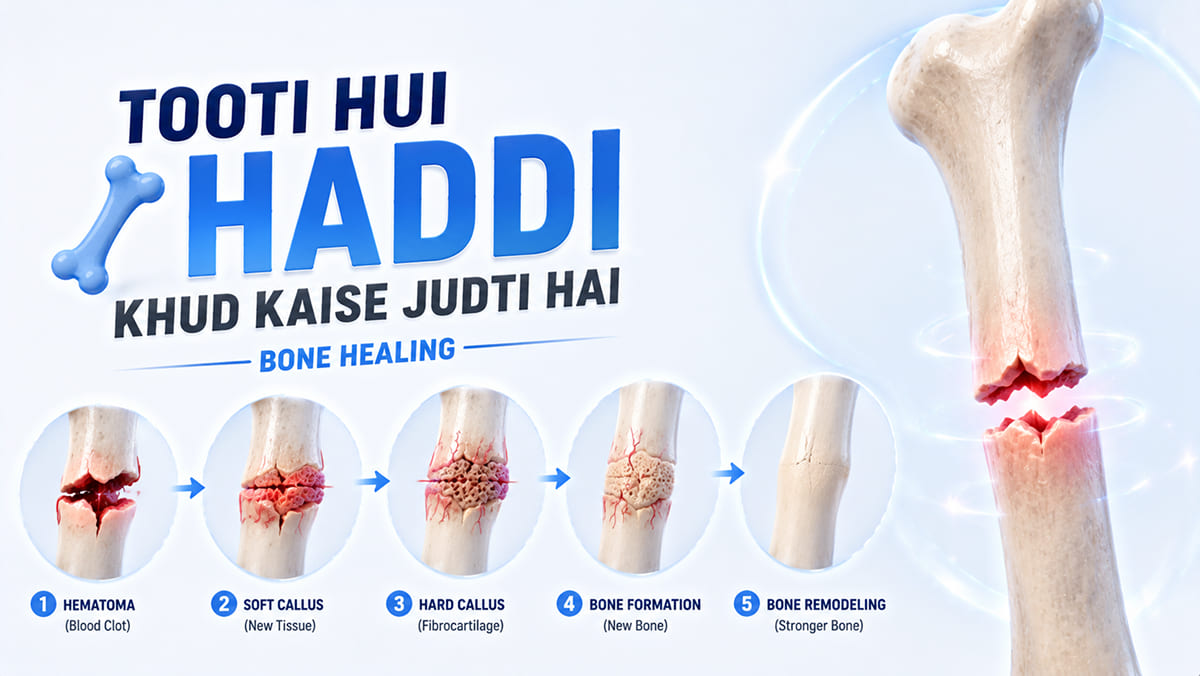
How Broken Bones Heal: The Complete Pathophysiology of Bone Repair
When you suffer a bone fracture (a broken bone) from an accident, a fall, or a sports injury, your body instantly initiates one of the most highly coordinated, fascinating, and complex physiological repair processes known to medical science. Most tissues in the human body, such as deep skin layers, muscle fibers, or heart tissues, heal by forming scar tissue. Scar tissue is tough and gets the job done, but it lacks the full functionality, flexibility, and strength of the original tissue.
However, the human skeletal system is incredibly unique. Bone is one of the very few tissues in the human body that can regenerate itself completely. When the healing process is fully finished, the broken area is replaced with 100% original, fully functional bone tissue, leaving virtually no scar behind. This biological miracle of cellular engineering happens in four distinct, overlapping physiological stages.
Stage 1: Hematoma Formation (The Inflammation Phase)
The healing process begins the exact millisecond the bone breaks. Bones are not dry, dead sticks; they are living, dynamic organs filled with a rich network of blood vessels. When the bone snaps, these internal blood vessels, as well as the blood vessels in the periosteum (the outer protective skin of the bone), are torn wide open.
- The Blood Clot: Severe internal bleeding occurs at the fracture site. Within a few hours, this pooled blood coagulates and forms a massive, solid clot known as a fracture hematoma. This hematoma acts as a temporary, biological splint, keeping the broken ends somewhat aligned and providing a framework for incoming cells.
- The Clean-up Crew: The hematoma triggers a massive inflammatory response. The body sends specialized white blood cells (macrophages and neutrophils) to the site. Their job is to aggressively eat up (phagocytose) dead bone cells, invading bacteria, and tissue debris, completely cleaning the construction site for the rebuilding phase. This phase causes the extreme swelling, redness, and pain you feel right after a fracture.
Stage 2: Fibrocartilaginous Callus Formation (The Soft Callus)
Within a few days to a week, the body needs to build a temporary bridge to connect the broken pieces of bone so they stop grinding against each other. The hematoma is gradually replaced by a tough, rubbery tissue, similar to the cartilage in your ears or nose.
Specialized cells called Fibroblasts migrate into the area and start laying down strong collagen fibers. At the same time, cells called Chondroblasts begin producing a type of cartilage. Together, they create a "soft callus" around the fracture. While this cartilaginous bridge effectively glues the bone ends together, it is completely soft and flexible. It cannot bear any body weight or resist twisting motions. This is exactly why orthopedic doctors place your broken limb in a rigid plaster cast or fiberglass splint during this highly vulnerable phase.
Stage 3: Bony Callus Formation (The Hard Callus)
After about three to four weeks, the soft, rubbery cartilage bridge must be converted into actual, rigid bone. This is where the body's primary bone-building cells, known as Osteoblasts, enter the scene in large numbers.
The osteoblasts rapidly multiply and begin depositing calcium and phosphate minerals into the soft cartilage matrix. They slowly replace the cartilage with a disorganized, spongy type of bone known as woven bone or trabecular bone. This creates a "hard callus." At this stage, the fracture is considered clinically stable (a state known as clinical union). The orthopedic surgeon will usually take an X-ray, remove your plaster cast, and tell you that the bone is healed. However, structurally, the bone is still very bulky, disorganized, and not yet at its maximum strength.
Stage 4: Bone Remodeling (The Final Polish)
The final phase of bone healing is the longest, taking several months to even a few years to complete. The bulky, disorganized hard callus needs to be beautifully sculpted and reshaped to perfectly match the bone's original, pre-fracture anatomy.
This phase is governed by Wolff's Law, a medical principle which states that bone grows and remodels in response to the physical stress placed upon it. A highly coordinated team of Osteoclasts (cells that break down and absorb old bone) and Osteoblasts work together. As you start physical therapy, walking, and using the limb, the osteoclasts shave away the excess, bulky bone on the outside. Meanwhile, the osteoblasts replace the weak spongy bone with incredibly strong, dense compact bone. Eventually, the bone is completely restored, often becoming even stronger at the fracture site than it was before the injury.
What Factors Delay Bone Healing? (Non-Union)
While the body is excellent at fixing bones, certain factors can drastically slow down or completely stop this process, leading to a condition called delayed union or non-union (where the bone simply refuses to heal).
- Smoking and Nicotine: Smoking is the absolute biggest enemy of bone healing. Nicotine constricts blood vessels, cutting off the vital supply of oxygen and nutrients to the osteoblasts. Smokers take twice as long to heal from fractures.
- Poor Nutrition: The body requires massive amounts of Calcium, Vitamin D, and Protein to build the hard callus. A severe deficiency will halt the healing process.
- Severe Diabetes: Uncontrolled blood sugar damages micro-blood vessels and impairs the immune system, significantly slowing down the inflammatory and rebuilding phases.
- Excessive Movement: If the plaster cast is loose or the patient walks on a broken leg too early, the micro-movement will constantly break the soft callus, preventing the hard callus from ever forming.
Nutrition Tips for Faster Bone Healing
To support your osteoblasts, your diet during recovery is crucial. Focus on consuming high-quality proteins (eggs, lean meats, lentils), dairy products for calcium (milk, yogurt, cheese), and ensure you get adequate sunlight or Vitamin D supplements, which are absolutely necessary for the intestines to absorb calcium from your food.