
Body Chot Ko Kaise Theek Karti Hai? (3D Animation)
How the Body Heals Wounds: The 4 Phases of Healing Have you ever wondered how a deep cut on your skin miraculously repairs itself after a few days? Wound healing...
Medically Reviewed By
Medscope Editorial Team Verified
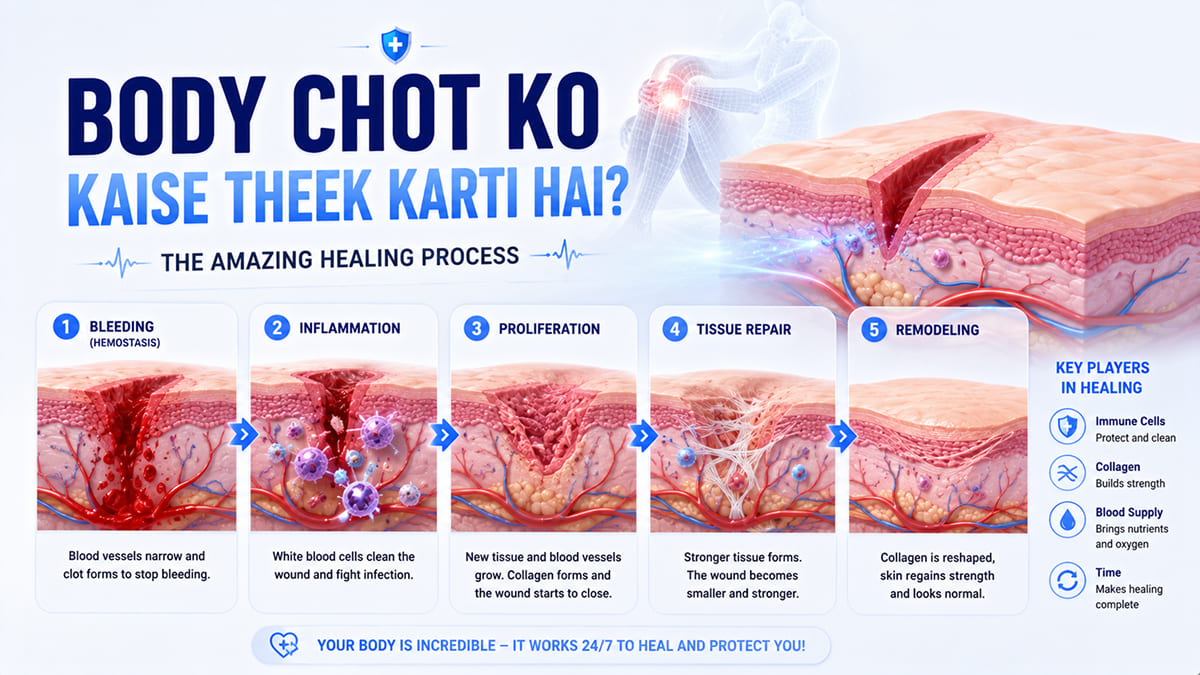
How the Body Heals Wounds: The 4 Phases of Healing
Have you ever wondered how a deep cut on your skin miraculously repairs itself after a few days? Wound healing is one of the most complex and fascinating physiological processes in the human body. It requires a perfectly coordinated response from your blood cells, immune system, and tissue-building proteins. In medical science, the wound healing process is divided into four distinct phases.
Phase 1: Hemostasis (Stopping the Bleeding)
The immediate priority of the body when you get cut is to prevent severe blood loss. This happens within seconds to minutes:
- Vasoconstriction: The injured blood vessels clamp down and tighten to restrict blood flow.
- Platelet Plug: Platelets in the blood stick to the damaged tissue, forming a temporary dam.
- Fibrin Clot: The coagulation cascade is activated, creating a strong protein mesh called fibrin. This acts like biological glue, locking the platelets together to form a solid scab.
Phase 2: Inflammation (Cleaning the Wound)
Once the bleeding stops, the blood vessels open up slightly (vasodilation) to allow immune cells to reach the site. This phase usually lasts for 2 to 5 days.
- You will notice redness, heat, and swelling around the cut.
- White blood cells, specifically macrophages and neutrophils, enter the wound to eat up dead tissue, destroy invading bacteria, and prevent infection.
Phase 3: Proliferation (Rebuilding Tissue)
Now that the wound is clean, the body starts rebuilding. This phase can last from a few days to several weeks.
- Specialized cells called Fibroblasts rush to the site and start producing collagen, a strong structural protein that acts as a scaffold for new tissue.
- New, tiny blood vessels form (angiogenesis) to supply oxygen to the newly building tissue.
- Epithelial cells multiply and migrate across the wound surface to create a new, fresh layer of skin.
Phase 4: Maturation / Remodeling (Strengthening)
The final phase can take anywhere from 3 weeks to a full year. The disorganized collagen laid down during the proliferation phase is broken down and replaced with thicker, highly organized collagen. The wound slowly shrinks and becomes stronger, eventually forming a permanent scar.
Factors That Delay Wound Healing
Wound healing slows when the body lacks oxygen, nutrients, blood supply, or immune strength. Diabetes, smoking, poor circulation, infection, steroid therapy, old age, dehydration, anemia, pressure over the wound, and protein deficiency can all delay repair. Vitamin C, zinc, protein, and adequate calories support collagen formation and immune defense. This is why chronic wounds, pressure ulcers, and diabetic foot ulcers need more than a dressing; they require blood sugar control, pressure relief, infection treatment, nutrition, and regular wound assessment.
Signs of Wound Infection
- Increasing Redness: Redness that spreads outward may indicate cellulitis.
- Swelling and Heat: Some inflammation is normal, but worsening warmth and swelling can signal infection.
- Pus or Bad Smell: Thick yellow, green, or foul-smelling discharge needs medical evaluation.
- Systemic Symptoms: Fever, chills, severe pain, or red streaks from the wound are warning signs.
Proper cleaning, moisture-balanced dressings, hand hygiene, and early infection recognition help the wound move through the four healing phases safely.