
Sote Waqt Brain Me Kya Hota Hai? | What Happens When We Sleep (3D Animation)
What Happens to Your Brain When You Sleep? Many people think that sleep is simply an "off switch" for the body and brain. In reality, while your physical muscles...
Medically Reviewed By
Medscope Editorial Team Verified
What Happens to Your Brain When You Sleep?
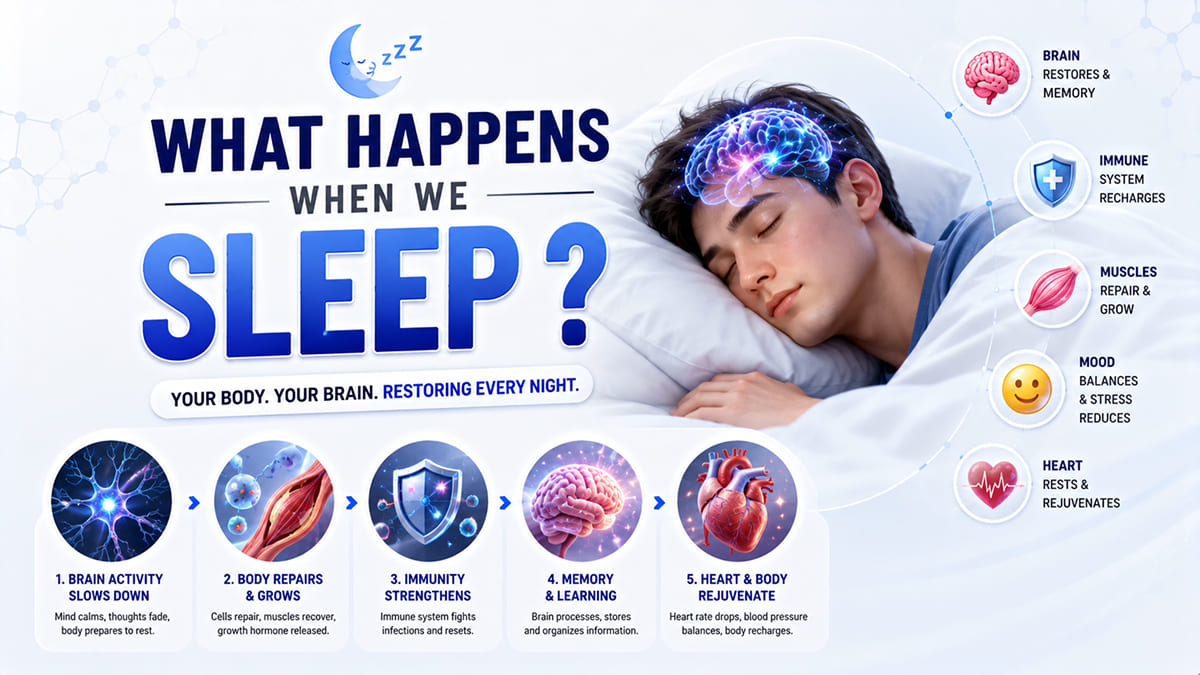
Many people think that sleep is simply an "off switch" for the body and brain. In reality, while your physical muscles paralyze and relax, your brain is highly active, performing critical maintenance, organizing memories, and flushing out toxins. Sleep is an active, dynamic neurological process divided into distinct stages.
The Sleep Cycle: NREM and REM Sleep
Throughout the night, your brain cycles through two main types of sleep every 90 to 120 minutes: Non-Rapid Eye Movement (NREM) and Rapid Eye Movement (REM) sleep.
1. NREM Sleep (The Deep Healing Phase)
NREM sleep makes up about 75% of your night and is broken down into three stages, culminating in deep, slow-wave sleep (Delta sleep).
- During deep NREM sleep, your blood pressure drops, heart rate slows down, and breathing becomes very steady.
- The brain focuses on physical restoration. It releases growth hormones for tissue repair, muscle growth, and immune system strengthening.
2. REM Sleep (The Dream and Memory Phase)
REM sleep is the stage where most vivid dreaming occurs. Your brain activity during REM looks almost identical to when you are fully awake!
- Memory Consolidation: During REM, the brain processes everything you learned during the day. It takes short-term memories from the hippocampus and permanently wires them into the cerebral cortex for long-term storage.
- Emotional Processing: The amygdala is highly active, helping you process emotional trauma and stress safely while you sleep.
The Glymphatic System: Brain Washing
Perhaps the most amazing thing the brain does during sleep is literally wash itself. While you are awake, your brain cells produce toxic byproducts (like amyloid-beta plaques, which are linked to Alzheimer's disease).
During deep sleep, the brain cells actually shrink slightly. This allows the Glymphatic System to pump cerebrospinal fluid (CSF) rapidly through the brain tissue, flushing out all the neurotoxins and waste products that accumulated during the day. This is why a good night's sleep leaves you feeling clear-headed and refreshed!
What Poor Sleep Does to the Body
When sleep is repeatedly shortened or fragmented, the brain loses time for memory consolidation, emotional regulation, and metabolic cleanup. People commonly experience poor concentration, irritability, slower reaction time, headaches, increased appetite, and reduced immunity. Long-term sleep deprivation is linked with higher stress hormone levels, insulin resistance, hypertension risk, mood disorders, and impaired learning. This is why medical students, shift workers, and caregivers often feel physically exhausted even if they are mentally active for many hours.
Simple Sleep Hygiene Tips That Actually Help
- Keep a Schedule: Try to sleep and wake at similar times so the circadian rhythm stays stable.
- Reduce Light at Night: Bright screens suppress melatonin, the hormone that signals darkness and sleep readiness.
- Avoid Heavy Stimulants: Caffeine late in the day can delay sleep onset and reduce deep sleep quality.
- Create a Wind-Down Routine: Gentle stretching, reading, prayer, meditation, or slow breathing helps the nervous system shift into rest mode.
Good sleep is not wasted time. It is active neurological maintenance that supports learning, immunity, emotional balance, and long-term brain health.