
Pet Me Khana Kaise Pachta Hai? | 3D Digestion System
How the Digestive System Works: From Mouth to Stomach The human digestive system is a marvel of biological engineering. Its primary job is to take the complex foo...
Medically Reviewed By
Medscope Editorial Team Verified
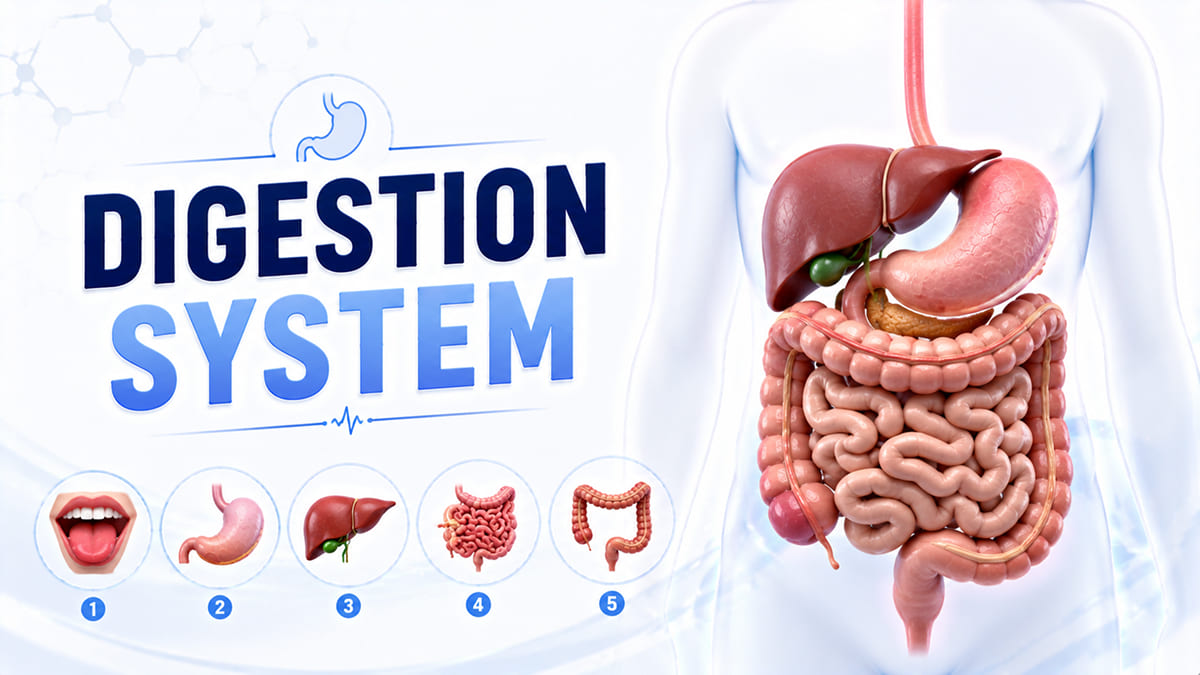
How the Digestive System Works: From Mouth to Stomach
The human digestive system is a marvel of biological engineering. Its primary job is to take the complex foods you eat, break them down into microscopic nutrients, and absorb them into your bloodstream to give you energy. The process of digestion relies on both mechanical crushing and chemical breakdown.
Step 1: The Mouth (Mechanical and Chemical Digestion)
Digestion actually begins before food even hits your stomach. When you take a bite, your teeth perform mechanical digestion by crushing and grinding the food into smaller pieces. Simultaneously, your salivary glands release saliva. Saliva contains an enzyme called Amylase, which starts the chemical digestion of carbohydrates (sugars and starches) right in your mouth. The tongue shapes the food into a soft ball called a bolus and pushes it down the throat.
Step 2: The Esophagus (Peristalsis)
Once you swallow, the food enters a muscular tube called the esophagus. Gravity doesn't just pull the food down; the muscles in the esophagus contract in a wave-like motion called Peristalsis, actively pushing the food down into the stomach.
Step 3: The Stomach (The Acid Chamber)
The stomach is a highly muscular, J-shaped pouch that acts as a blender and a chemical bath. When the food drops in, the stomach muscles aggressively churn and mash the food.
At the same time, the stomach lining secretes highly corrosive Hydrochloric Acid (HCl) and an enzyme called Pepsin. The acid is so strong (pH of 1.5 to 3.5) that it destroys harmful bacteria and unravels tough proteins in meat. The pepsin then chops these proteins into smaller pieces. After 2 to 4 hours in the stomach, the solid food has been turned into a thick, acidic, soup-like liquid called Chyme.
Step 4: The Small Intestine (Absorption)
The stomach slowly squirts this chyme into the first part of the small intestine (the duodenum). Here, the real magic happens:
- The Liver produces bile (stored in the gallbladder) which acts like soap, breaking down large fat droplets into tiny ones.
- The Pancreas releases powerful enzymes to completely dismantle proteins, fats, and carbs into their smallest molecular forms (amino acids, fatty acids, and glucose).
The inner walls of the small intestine are covered in millions of tiny, finger-like projections called Villi. These villi act like a sponge, absorbing the microscopic nutrients directly into the bloodstream, distributing energy to the rest of the body.
Why the Small Intestine Is the Main Absorption Site
Although the stomach is famous for acid and churning, most nutrient absorption does not happen there. The small intestine is specially designed for absorption because it has a huge surface area created by folds, villi, and microvilli. Glucose and amino acids enter tiny blood capillaries, then travel through the portal vein to the liver for processing. Fats take a different route: they enter small lymphatic vessels called lacteals before joining the bloodstream. This organized system allows the body to extract energy, vitamins, minerals, proteins, carbohydrates, and healthy fats from the same meal.
Common Digestive Problems Explained Simply
Many everyday symptoms can be understood by looking at the normal digestion pathway. Acid reflux happens when acidic stomach contents move backward into the esophagus, causing burning in the chest. Indigestion and bloating often occur when food stays in the stomach longer than usual or when gas builds up during intestinal fermentation. Diarrhea develops when the intestines move too fast or cannot absorb enough water, while constipation happens when stool moves slowly and becomes dry. Eating slowly, chewing properly, drinking enough water, taking fiber-rich foods, and staying physically active all support smoother digestion and better gut health.